
 0
0

 English
 Español
 中文简体
中文简体 عربى
عربى
Industry News

Submit
Submit feedback
Do Deep Groove Ball Bearings Need Preload? Complete Guide
2026-08-03
Deep groove ball bearings do not need preload in most standard applications. They are designed to operate with a controlled internal clearance, and preload is a conditional measure for specific situations such as high-speed running, very light loads, strict noise limits, or high rigidity requirements. This article explains what preload actually does, when deep groove ball bearings genuinely require it, and how to apply it without shortening bearing life.
What Is Preload in Ball Bearings?
Preload is a sustained axial force applied to a bearing during installation so that the rolling elements stay in continuous contact with the raceways. The force removes the free axial play that exists inside a bearing in its neutral, unloaded state. In practical terms, preload converts the bearing's internal clearance into a controlled compressive condition.
Internal clearance and preload are different things. Internal clearance is the built-in play designed into the bearing at the factory, classified as C0, C2, C3, or similar grades. Preload is a load state created at assembly time. When the applied axial preload is large enough to consume the internal clearance, the operating state becomes, in effect, a negative clearance.
The core purpose of preload is to prevent rolling elements from skidding or momentarily losing contact with the raceways. When contact is continuous, motion is smoother, impact forces disappear, and the bearing assembly becomes measurably stiffer.
Do Deep Groove Ball Bearings Normally Need Preload?
No. Under standard radial loads and moderate speeds, deep groove ball bearings are designed and manufactured to run without preload. The internal clearance built into standard bearings accommodates thermal expansion and normal load deflection. That is why the majority of deep groove ball bearings in service operate exactly as they come from the box.
Deep groove ball bearings use the Conrad assembly method, in which the balls are inserted through a gap between the inner and outer rings and then spaced evenly by the cage. This construction is naturally suited to running with a defined clearance rather than with forced axial contact. Applying preload pushes the bearing out of its designed clearance-based operating state, which is justified only when the application demands it.
Standard series such as 6000, 6200, 6300, 6800, and 6900 are installed without preload in motors, pumps, household appliances, and general power transmission equipment. Many motor builders fit standard bearings directly onto the shaft and into the housing with no preload arrangement at all. This is the default expectation across the industry, and it applies to deep groove ball bearings for motors just as it does to general-purpose bearings.
For applications that do not demand special stiffness or noise performance, a standard sealed bearing is usually sufficient. A sealed 6000 series deep groove ball bearing with rubber seals, for example, preserves the internal clearance condition during installation and operation, and it runs without preload in typical motor and pump service.
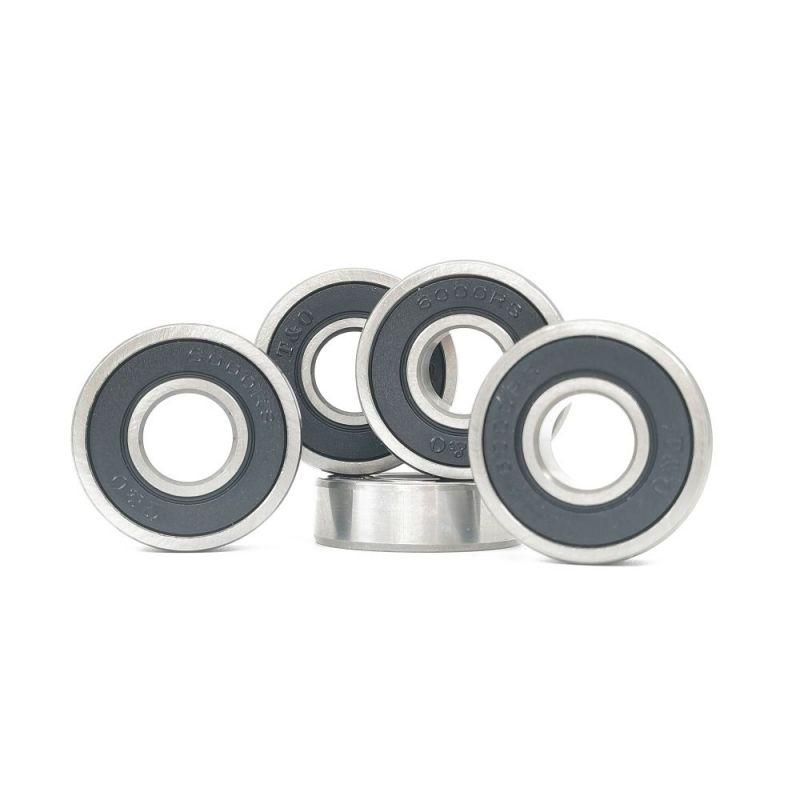 Wholesale 6000RS Carbon steel Double Rubber Sealed Deep Groove Ball Bearings FacZhejiang Yingfei Biotechnology Co., Ltd. is China wholesale 6000RS Carbon steel Double Rubber Sealed Deep Groove Ball Bearings factory an...View Product →
When Do Deep Groove Ball Bearings Require Preload?
Preload becomes relevant when operating conditions push a deep groove ball bearing outside the range its standard clearance was designed for. The situations below are the ones that come up most often in practice.
High-speed operation
When the dn value (bore diameter in millimeters multiplied by shaft speed in rpm) approaches the high-speed range, centrifugal forces can lift the rolling elements off the outer raceway and cause skidding. Axial preload keeps the balls in continuous contact with both raceways, preventing skidding and the heat it generates. For high-speed motor service, high-speed motor-grade bearings are built with tighter geometric control, but the installation method must still match the speed. In this range, a light axial preload is a common and accepted engineering practice.
Light radial load at high speed
When the radial load is very small, typically below about 1 to 2 percent of the bearing's dynamic load rating, the rolling elements may not roll reliably and instead slide inside the raceways. This skidding produces wear and elevated temperature. A light preload creates a stable contact force between the balls and raceways. This is why miniature deep groove ball bearings used in small instruments and light-duty motors are often preloaded with springs when they run at high speed.
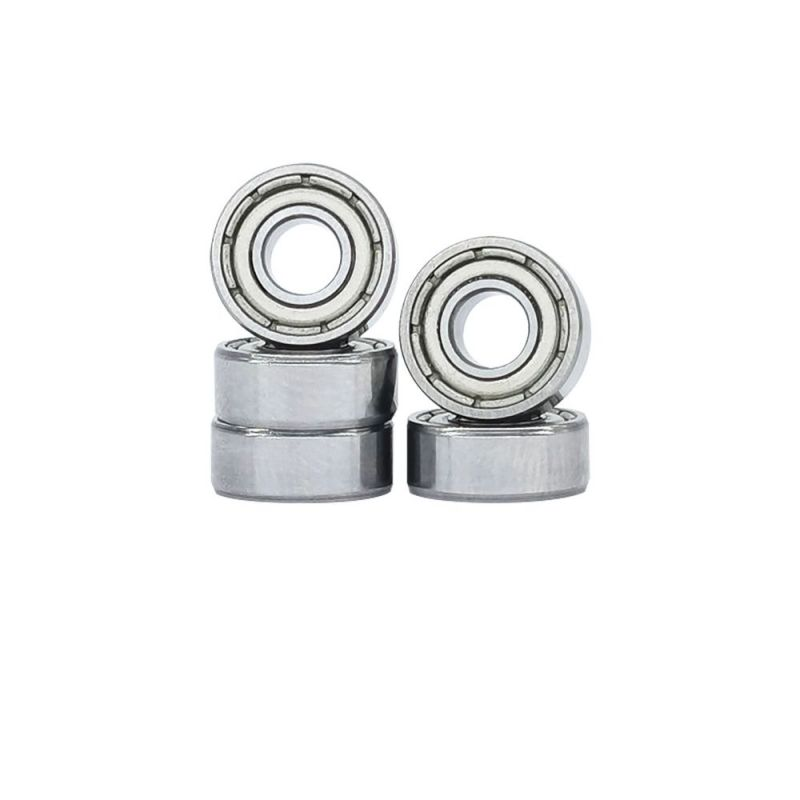 Wholesale MR104ZZ Miniature Deep Groove Ball Bearing Factory, Manufacturers - ZhZhejiang Yingfei Biotechnology Co., Ltd. is China wholesale MR104ZZ Miniature Deep Groove Ball Bearing factory and manufacturers, details...View Product →
Variable or shock loads
When the direction or magnitude of the load changes frequently, the bearing clearance creates a brief loss of contact followed by impact when the load returns. Preload removes that clearance, so the rolling elements stay in contact through load reversals, reducing impact noise and mechanical fatigue.
Strict noise or vibration limits
Preload absorbs internal clearance and restricts uncontrolled ball movement, which lowers the noise emitted by the bearing. In applications with tight sound or vibration limits, a lightly preloaded bearing runs quieter than the same bearing operating loose. For consistently quiet operation, low-noise deep groove bearings add an extra level of manufacturing tolerance control on top of whatever preload the application requires.
High rigidity or positioning accuracy
Preload compresses the elastic deflection zone of the bearing, so the shaft position shifts less under changing loads. Machine tool spindles, positioning stages, and measuring equipment rely on this effect to hold a stable shaft position.
| Application condition | Preload required? | Primary reason |
|---|---|---|
| Standard radial load, moderate speed | No | Internal clearance handles expansion and deflection |
| High-speed operation (high dn value) | Yes | Prevents rolling element skidding |
| Light radial load with high speed | Yes | Establishes stable rolling contact |
| Frequent load direction changes | Yes | Eliminates impact caused by clearance |
| Strict noise or vibration limits | Yes | Reduces rolling element movement and noise |
| High positioning accuracy or rigidity | Yes | Compresses elastic deflection range |
If you are still uncertain, run through this checklist:
- Is the operating speed high in terms of dn value? If yes, plan for axial preload.
- Is the radial load below roughly 1 to 2 percent of the dynamic load rating? If yes, a light preload is recommended.
- Does the load change direction frequently or include shocks? If yes, preload will stabilize the bearing.
- Are noise or vibration limits strict? If yes, combine preload with a low-noise bearing grade.
- Is the load steady, moderate, and mostly radial? If yes, install without preload.
How to Apply Axial Preload on Deep Groove Ball Bearings
Once you have confirmed that preload is necessary, the next question is how to apply it. Three methods are in common use.
Spring preload
The most forgiving method is spring preload. A Belleville washer or a coil spring applies a controlled axial force to the outer ring or the inner ring. Because a spring maintains a relatively constant force even when thermal expansion changes the distance between the bearing seats, spring preload is the safest choice for deep groove ball bearings. It is also the standard solution for single-bearing configurations, where one bearing carries the load and the spring simply keeps the rolling elements in contact.
Double-bearing arrangement
The second method uses two deep groove ball bearings mounted face-to-face or back-to-back. Preload is set by the width difference between the inner-ring spacer and the outer-ring spacer. The machined spacers dictate how much axial force the two bearings exert on each other. This configuration produces a stiffer system but requires accurate spacer machining and careful assembly.
Lock nut or end cover adjustment
The third method is rigid axial positioning with a lock nut or end cover. The bearing is clamped axially until the internal clearance is absorbed. This method is simple but the least forgiving, because the clamping force is hard to measure, and thermal expansion can quickly convert a correct preload into an excessive one.
As a rough reference, axial preload for a deep groove ball bearing generally falls in the range of approximately 0.5 to 2 percent of the bearing's axial dynamic load rating. The exact value depends on bearing size, operating speed, and the stiffness the application requires, so treat this figure as a starting point rather than a final specification. The bearing manufacturer should confirm the recommended preload for your specific duty.
Risks of Excessive Preload — and How to Avoid Them
Applying too much preload is a more common field problem than applying too little. When the preload force is excessive, friction between the rolling elements and the raceways rises sharply, and the first visible sign is an increase in operating temperature. A housing temperature that consistently sits more than about 30°C above ambient is a warning that the preload, the clearance class, or the lubrication needs review.
Elevated temperature leads to the second problem: accelerated lubricant degradation. When the grease or oil loses its film strength, metal-to-metal contact follows and wear accelerates quickly. At the same time, the effective bearing load is higher than the external load because the preload adds to the internal stress state, which shortens the calculated fatigue life.
Abnormal noise is another useful signal. A properly preloaded bearing runs quieter than a loose one, but excessive preload produces a higher-pitched whine or a rough sound as the rolling elements deform the raceways. If noise increases after preload is applied, reduce the preload force first before changing other parameters. For more on the factors behind noisy bearings, see controlling noise and vibration in deep groove ball bearings.
There is also a design-level risk to keep in mind. Deep groove ball bearings are not the ideal choice when an application requires frequent, precise bi-directional axial positioning. Angular contact ball bearings are specifically designed to carry axial preload and deliver better axial stiffness. If positioning accuracy is the driving requirement, reconsider the bearing type before deciding to increase preload on a deep groove ball bearing.
How to Specify Preload Requirements When Ordering Bearings
Standard deep groove ball bearings ship without preload; preload is created at the point of assembly. The ordering process still needs to reflect the preload plan, because the bearing's internal clearance class directly affects how much preload can be applied in service.
Choose the internal clearance class together with the preload target. C3 clearance is common for high-temperature or high-speed operation because it leaves room for thermal expansion, and the axial preload works against a reduced effective clearance. For precision applications where minimal internal play is acceptable, C2 or a tighter clearance class can be specified. State the clearance class and the preload force clearly when communicating your requirements to the supplier.
If the application needs matched pairs of bearings with a consistent preload, say so in the order. Bearings intended for a preloaded pair configuration must be selected or manufactured with matched dimensions; a standard off-the-shelf pair is not guaranteed to produce the same preload behavior.
Custom configurations deserve special attention. Non-standard designs such as extended inner rings, special seals, or modified cage materials can interact with the preload method. Discussing the preload force and the clearance class with the manufacturer at the design stage prevents the situation where the delivered part cannot achieve the intended preload. For custom requirements, custom non-standard bearing solutions can be adapted to match the preload and clearance specification of the application.
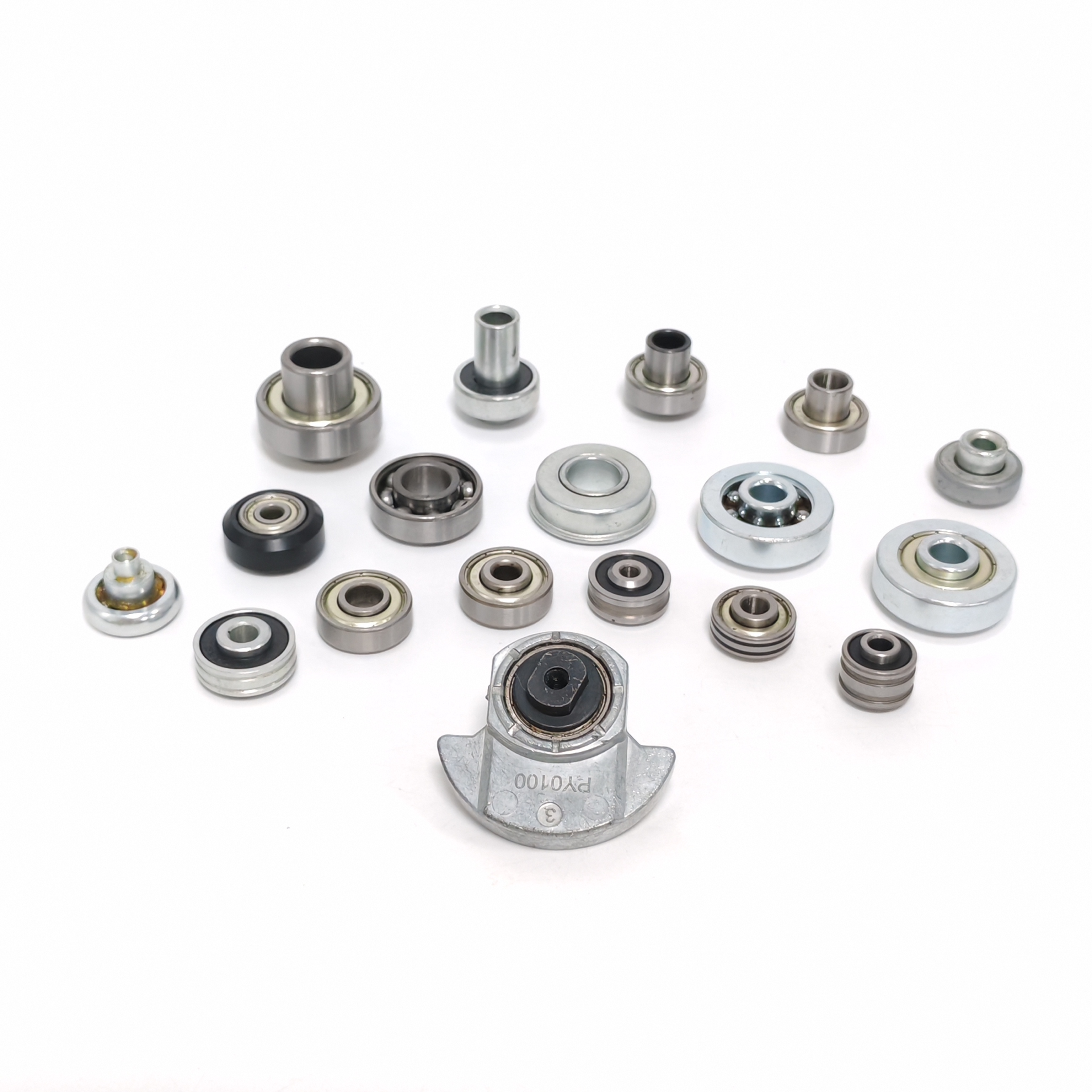 Custom Non-Standard Ball Bearings Manufacturers, SuppliersAs China non-standard ball bearings manufacturers and OEM/ODM non-standard bearing suppliers, Zhejiang Yingfei Biotechnology Co., Ltd. su...View Product →
Conclusion: Preload Is a Conditional Requirement, Not a Default
Whether deep groove ball bearings need preload depends entirely on the operating conditions. Standard radial load at moderate speed runs correctly without preload; the internal clearance is part of the bearing's design. High speed, very light load, variable load direction, strict noise limits, and high rigidity requirements all justify adding axial preload. When preload is applied, a spring-based system is the safest method, and the preload force should be kept on the conservative side, because over-preloading causes heat, noise, and shortened bearing life.
Review your application against the conditions listed in Table 1. If any of them apply, plan the preload together with the clearance class when you order the bearings. If none of them apply, install the bearing exactly as it is designed to run — without preload.
recommend products
-


608RS Chrome steel Double Rubber Sealed Deep Groove Ball Bearings
-
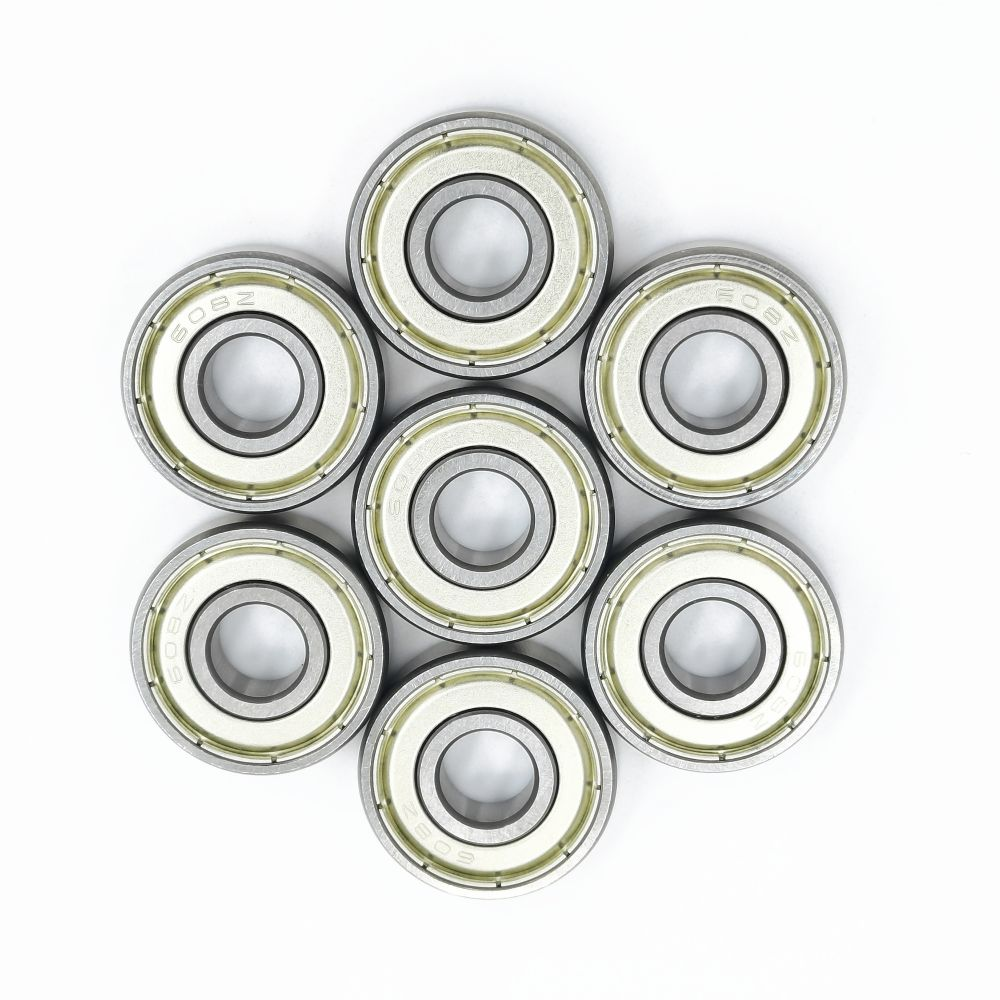
608ZZ Single column Double Iron Sealed Deep Groove Ball Bearing
-
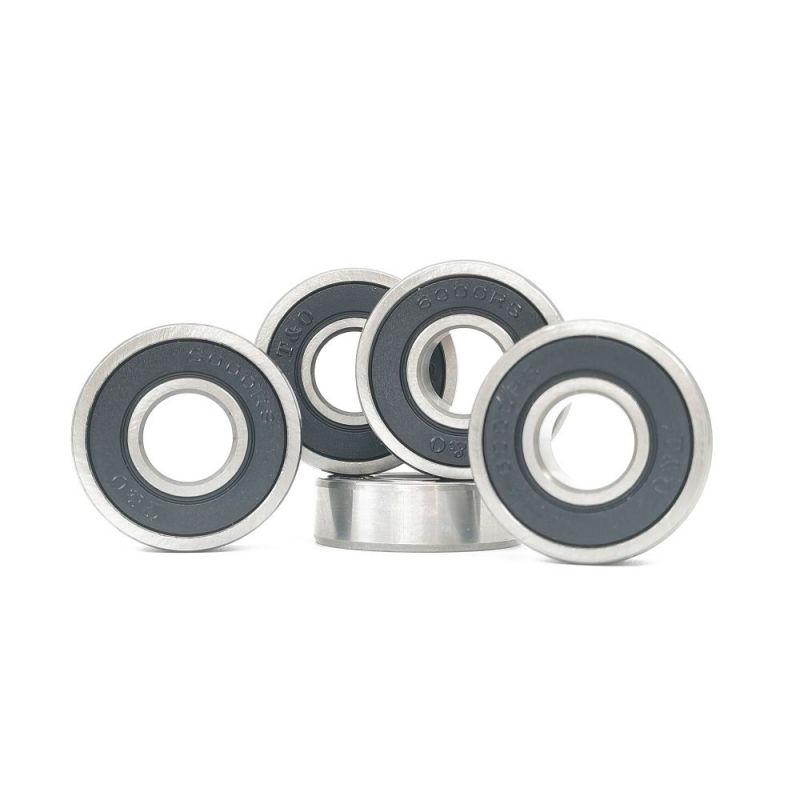
6000RS Carbon steel Double Rubber Sealed Deep Groove Ball Bearings
-
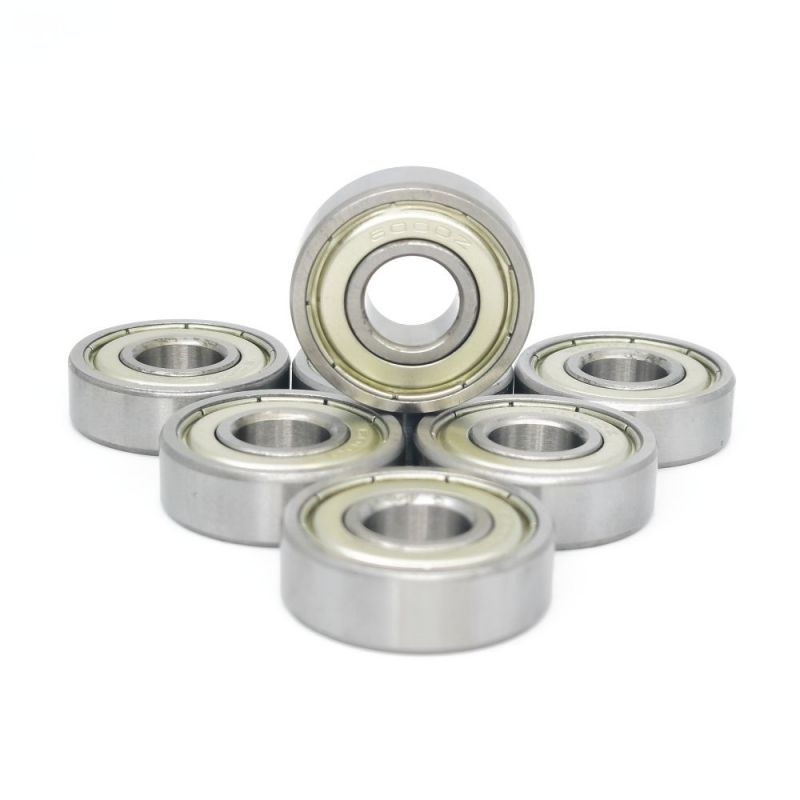
6000ZZ Grease Lubrication Double Iron Sealed Deep Groove Ball Bearing
-
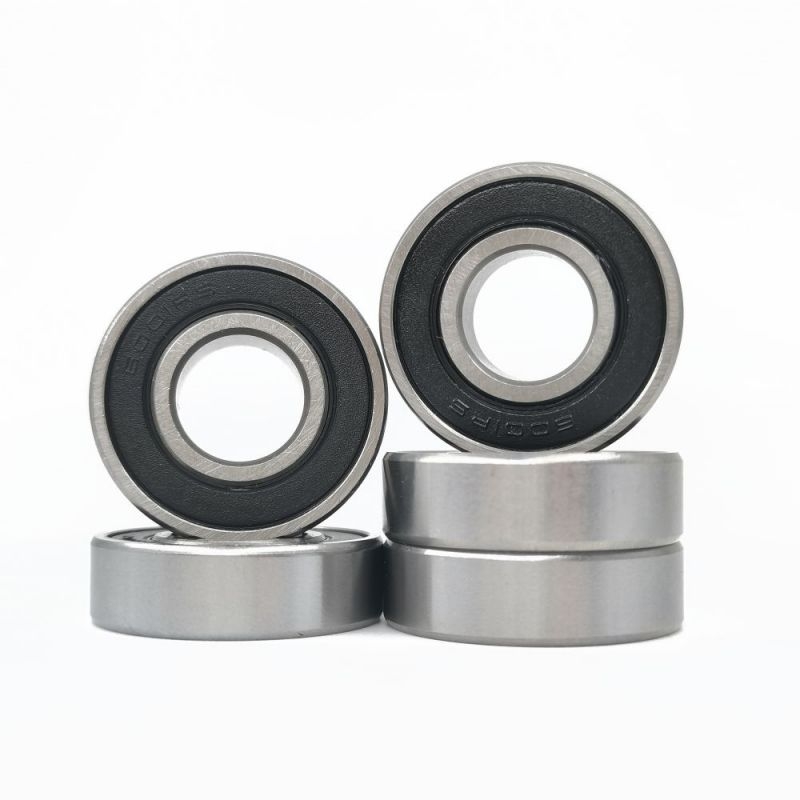
6001RS Double Rubber Sealed Deep Groove Ball Bearings For Motorcycles


Products
CONTACT Us
+86-13362474260 +86-0574-63322565
No. 98 Xinlang Road, Langxia Street, Yuyao City, Zhejiang Province, China
Mobile Site
Copyright© Zhejiang Yingfei Biotechnology Co., Ltd. All Rights Reserved
 Wholesale Motorcycles/Cars Vehicles Bearing Source Factory