
 0
0

 English
 Español
 中文简体
中文简体 عربى
عربى
Industry News

Submit
Submit feedback
Do Deep Groove Ball Bearings Outperform Normal Ball Bearings
2026-08-10
At the simplest level, a deep groove ball bearing is a version of a normal ball bearing in which the raceway grooves in the inner and outer rings are deeper and continuous. That geometry is why a deep groove bearing can handle both radial and axial load, run at higher speeds, and remains the default rolling bearing for most industrial applications. The phrase "normal ball bearing," however, is not an exact engineering term, so it helps to define what it means before comparing.
What Is a Normal Ball Bearing?
A ball bearing in its basic form has four functional parts: an inner ring, an outer ring, a set of steel balls, and a cage that keeps the balls evenly spaced. "Normal" is usually a shorthand for a single-row radial ball bearing, the kind of component found in small motors, fans, skateboards, and pulleys. But the same word can mean different things in different catalogs:
- Some engineers use "normal" to mean a standard deep groove ball bearing, because the deep groove version is the most widely used type.
- Others use "normal" to mean a full-complement bearing without a cage, which packs in more balls for higher radial load but trades away speed and friction.
- A few manufacturers apply "normal" to a shallow-raceway radial bearing designed mainly for light radial duty.
This article compares the most practical interpretation: a basic single-row radial ball bearing with shallow or non-deep raceways versus a deep groove ball bearing.
What Is a Deep Groove Ball Bearing?
A deep groove ball bearing has deep, uninterrupted raceway grooves machined into both the inner and outer rings. The balls run in a curved channel whose shape closely matches the ball diameter, which keeps the rolling elements guided even when the load direction changes. The cage separates the balls so they do not rub against one another, reducing friction and heat while preserving high-speed capability.
This design is the foundation of the standard 6000, 6200, 6300, 6800, 6900, and MR series that you will see in most bearing catalogs. If you want to look at actual products before going further, browse our complete range of deep groove ball bearings for the available sizes and sealing styles.
Key Differences Between Normal and Deep Groove Ball Bearings
The structural difference in the raceway creates a cascading effect on load capacity, speed, friction, sealing choices, and application fit. The sections below break down what those changes mean in real engineering terms.
Raceway Depth and Contact Surface
The most visible difference between a normal shallow-race ball bearing and a deep groove ball bearing is the shape of the contact surface. In a deep groove bearing, the balls sit in a deep, continuous channel that distributes stress over a larger curved area. That reduces stress concentration at the edges of the raceway and gives the bearing more stability under combined radial and axial loads.
A shallow raceway keeps the balls close to a single plane and works well for simple radial loads. When an axial load is introduced, the balls in a shallow raceway have limited side support, so the bearing can lose load-carrying ability quickly. In practical terms, the raceway profile is the first thing to inspect when you are comparing the two types.
Load Capacity: Radial vs. Axial
Deep groove ball bearings are designed primarily for radial loads, but they also handle moderate axial loads in both directions. The reason is simple: the deeper groove creates a lateral guiding surface that allows axial force to be transferred through the balls into the raceway wall.
A normal shallow-race ball bearing is weaker in this respect. It will handle radial load without trouble, but it cannot accommodate the same level of thrust. If your application produces axial loads from two sides, a single deep groove bearing can usually cover it, as long as the load stays within the allowable range for the bearing size and speed.
Speed Performance and Friction
Deep groove ball bearings use point contact between the balls and the raceway in the unloaded state. This naturally produces lower friction than line contact designs such as cylindrical or tapered roller bearings, which is why deep groove bearings are common in high-speed electric motors and spindles.
This is also where a cageless "normal" ball bearing shows its weak point. A full-complement bearing has more balls and higher load capacity, but the balls rub against each other during operation. That friction creates heat and limits speed. A deep groove bearing with a properly designed cage gives a better balance of load, speed, and operating temperature.
Sealing and Protection Options
Both normal and deep groove ball bearings can be supplied open, shielded, or sealed. In practice, however, the deep groove format is far more likely to be offered with a wide range of protection options.
Open bearings have low friction and allow easy re-lubrication. Metal shields, often labeled Z or ZZ, block large particles while maintaining high-speed capability. Rubber or synthetic seals, often labeled RS, provide better protection against dust and moisture but add drag and reduce the maximum speed.
If you need a compact, factory-sealed solution, double-shielded deep groove bearings are a sound choice because the shields preserve speed while keeping contamination out.
Material Options and Their Trade-offs
Material selection matters just as much as raceway geometry. Chrome steel is the most common choice for chrome steel deep groove bearings, offering high hardness, good fatigue resistance, and dependable wear characteristics. Carbon steel is a lower-cost option for light-duty applications, but it has weaker corrosion resistance. Stainless steel is required for wet, humid, or washdown environments.
The specific stainless grade changes the performance balance. AISI 304 stainless steel bearing options provide excellent corrosion resistance, while AISI 440C stainless steel offers higher hardness and better wear resistance. When an application needs both corrosion protection and mechanical durability, 440C is usually the better technical fit.
Series-by-Series: How Deep Groove Designs Vary in Practice
The deep groove family is not one product, it is a group of related products with different cross-sections, bore sizes, and load capacities. Choosing the right series often matters more than choosing between a "normal" bearing and a "deep groove" bearing.
| Series | Approximate Bore Range | Load Orientation | Best-Fit Applications |
|---|---|---|---|
| 6000 | 10–50 mm | Primarily radial, moderate axial | Small motors, pumps, compact machinery |
| 6200 | 10–50 mm | Radial and moderate axial | General industrial drives, fans, household appliances |
| 6300 | 10–50 mm | Higher radial, moderate axial | Larger motors, gearboxes, shafting |
| 6800 / 6900 | 10–30 mm and above | Light radial, low axial | Robotics, instrumentation, compact assemblies |
| MR | 1–10 mm | Very light radial and axial | Miniature motors, dental tools, precision equipment |
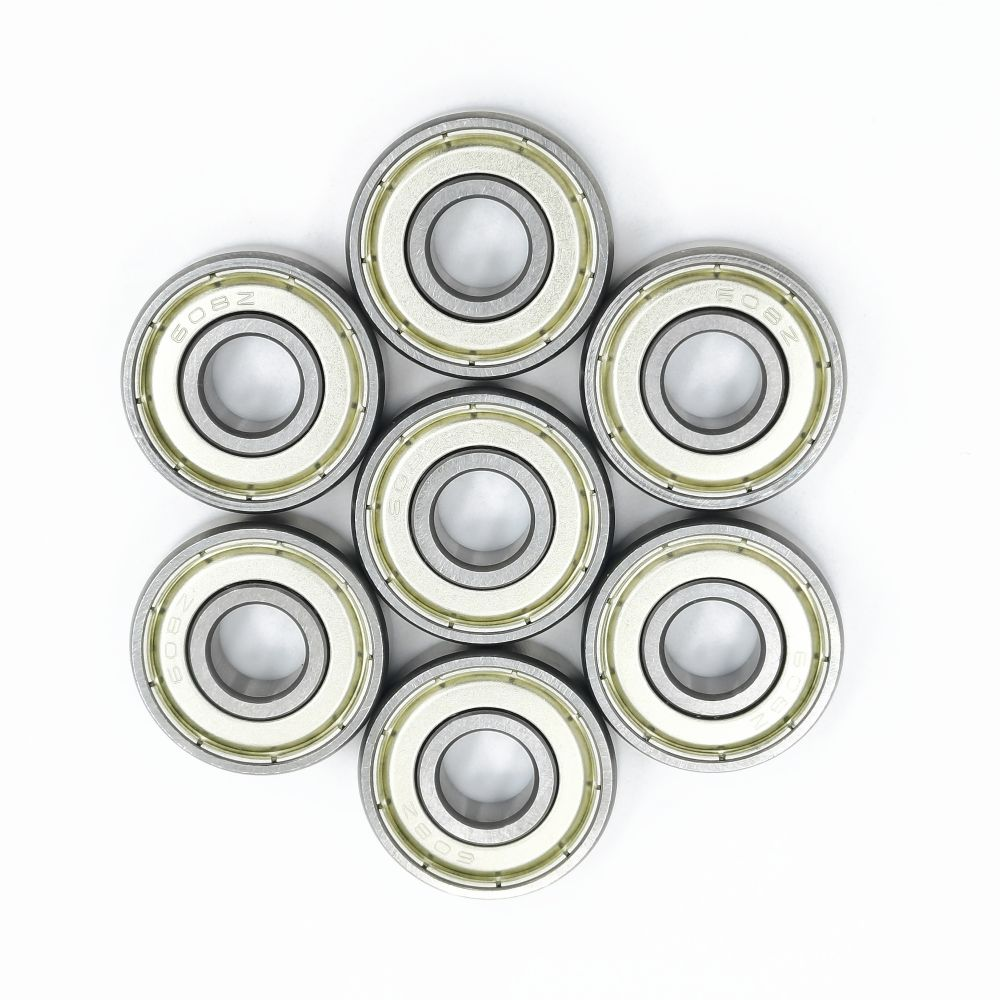
The MR and 6800/6900 series are useful in applications where space is tight but high speed is still required. A common example is the 608ZZ sealed deep groove ball bearing, a favorite in compact drives, rollers, and light industrial equipment.
How to Choose the Right Bearing for Your Application
Use the following four-step framework to move from a broad bearing type to a specific part number.
- Identify the primary load direction. If the load is mostly radial, a 6000 or 6200 series bearing will usually work. If there is meaningful axial load, choose a deep groove bearing and confirm that the axial capacity is enough for both directions. For high axial loads, a different bearing type may be needed.
- Check the speed and noise requirements. High-speed, low-noise applications favor a caged deep groove bearing. For very high shaft speeds, prefer an open or metal-shielded design. Contact seals add drag and should be avoided unless contamination is a bigger risk than speed.
- Evaluate the operating environment. Dry indoor duty can use chrome steel. Humid, washdown, or food-related duty needs stainless steel. Heavy dust or debris favors a sealed configuration. If the standard material set does not cover the environment, ask the supplier about stainless steel options.
- Confirm dimensions and customization needs. Check bore diameter, outside diameter, width, and precision class. If your shaft design requires an extended inner ring, a different bore, or an unusual seal, customized non-standard precision bearings can be a practical route when the standard range is not enough.
Choosing a Reliable Bearing Manufacturer
Even a technically correct bearing design will fail if the manufacturing process is inconsistent. That is why supplier evaluation is part of bearing selection, not just a purchasing step.
- Quality system: A documented quality management system such as ISO 9001:2015 is the baseline for consistent dimensional and material control.
- Production capacity: A manufacturer with higher annual capacity, for example 30 million sets per year, is better positioned to support repeat orders and volume commitments.
- Material transparency: A reliable source should clearly state whether a bearing is chrome steel, carbon steel, or stainless steel, and which stainless grade is used.
- OEM/ODM support: Suppliers with in-house engineering can adapt standard deep groove bearings to non-standard bores, extended rings, special seals, or custom packaging.
- Export experience: A supplier that combines factory production with international trading experience can simplify communication, logistics, and after-sales response, especially for overseas buyers.
Once you understand how raceway depth, load direction, speed, sealing, material, and series selection interact, the difference between normal and deep groove ball bearings becomes straightforward. Start with the load and environment, choose the series that matches the bore size, confirm the material and sealing, and then verify that your supplier has the quality systems and production depth to deliver consistently.
How Raceway Geometry Is Actually Held to Tolerance on the Shop Floor
Everything explained above about raceway depth, contact stress, and axial capacity depends on one thing the catalog page never shows: how tightly the raceway curvature is controlled during grinding. A raceway drawing can specify the correct radius on paper, but the bearing only performs as described once that radius is reproduced consistently across every ring in a production run, ring after ring, shift after shift.
This is the gap between a bearing that reads well in a datasheet and a bearing that actually holds its rated axial capacity in the field. Ring ovality, raceway surface finish, and ball-to-raceway conformity all interact with each other, and a small deviation in any one of them shows up later as vibration, noise, or a shortened fatigue life. Our production floor treats each of these as a checkpoint rather than a final inspection item, because catching a deviation at the grinding stage is far less costly than catching it after assembly.
Steel Sourcing and Verification
Chrome steel, carbon steel, and stainless bar stock are checked against composition and hardness specifications before turning begins, since inconsistent steel is the most common root cause of premature raceway fatigue.
Ring Turning and Heat Treatment
Rings are turned to near-final dimension, then heat treated under controlled cycles to achieve the hardness profile the raceway needs to resist rolling contact fatigue.
Raceway Grinding and Superfinishing
Precision grinding shapes the deep groove curvature to match ball diameter within tight tolerance, and superfinishing removes microscopic surface irregularities that would otherwise generate noise and vibration.
Ball Sorting and Cage Assembly
Balls are sorted by diameter into narrow tolerance groups before assembly, and the cage is fitted to keep spacing even, both of which directly affect the friction and speed behavior described earlier in this article.
Material Performance Reference Across Our Bearing Range
Material choice interacts with raceway design in ways a bore chart alone cannot show. The table below lines up the material families most often requested alongside the series comparison earlier in this article, focused on the practical trade-offs a buyer weighs before placing an order.
| Material | Corrosion Resistance | Relative Hardness | Typical Use Case |
|---|---|---|---|
| Chrome Steel (GCr15) | Low, needs dry or lubricated conditions | High, excellent fatigue life | General industrial motors, pumps, gearboxes |
| Carbon Steel | Low | Moderate | Light-duty, cost-sensitive applications |
| AISI 304 Stainless Steel | Excellent | Moderate | Food processing, washdown, marine equipment |
| AISI 440C Stainless Steel | Very good | High, wear resistant | Corrosive environments with higher mechanical load |
Buyers sometimes assume stainless steel is simply the safe default for any demanding application, but the table shows why that assumption can backfire. AISI 304 gives up some hardness for its corrosion performance, while 440C recovers most of that hardness at a somewhat lower corrosion ceiling. Matching the grade to the actual combination of moisture exposure and mechanical load, rather than defaulting to the most corrosion-resistant option, usually gives the better long-term result.
Where Deep Groove Bearings Show Up in the Field
Electric Motors and Fans
This is the application the deep groove design was essentially built for. Point contact between balls and raceway keeps friction low enough for continuous high-speed rotation, while the groove depth still absorbs the small axial loads that come from fan blade thrust or slight shaft misalignment in a motor housing.
Industrial Pumps
Pump shafts combine radial load from the impeller with axial thrust from fluid pressure, which is exactly the combined-load scenario described earlier in the raceway depth discussion. A 6200 or 6300 series bearing sized correctly for the shaft usually covers both load directions without needing a separate thrust bearing.
Food and Beverage Machinery
Washdown cycles and product contact rule out chrome or carbon steel outright. AISI 304 stainless deep groove bearings are the standard choice here, since the material performance table above shows corrosion resistance outranking raw hardness for this kind of exposure.
Robotics and Precision Instruments
Compact 6800, 6900, and MR series bearings serve joints and small drive assemblies where space is the limiting factor rather than load. Consistent raceway grinding matters even more at this scale, since a small dimensional error represents a much larger percentage of a miniature bearing's total tolerance budget.
Quality Control From Steel to Finished Bearing
Because the raceway precision described earlier in this article decides how a bearing actually performs, testing happens at several stages rather than as a single final check.
1
Incoming Steel Inspection
Bar stock composition and hardness are verified against specification before any ring enters the turning process, catching material issues before they become dimensional problems downstream.
2
Dimensional and Raceway Inspection
Bore diameter, outside diameter, and raceway curvature are measured on a sampling basis throughout grinding, confirming the groove profile matches the ball diameter it will run against.
3
Noise and Vibration Testing
Assembled bearings are run under load and monitored for abnormal noise or vibration signatures, which often reveal a raceway or ball defect that dimensional inspection alone can miss.
4
Batch Traceability
Every batch is logged against its steel lot and inspection results, so any field issue can be traced back to a specific production run rather than treated as an isolated event.
Custom Manufacturing, Packaging, and Global Shipping
Standard bore sizes and series cover most applications, but many customers need an extended inner ring, a non-standard bore, or a specific seal configuration matched to an existing shaft design. Our engineering team works from a customer's drawing or sample part, confirms fit and load behavior on the bench, then scales the design into a repeatable production run.
Drawing-Based Custom Bearings
Non-standard bores, extended inner rings, and special seal configurations machined to match a customer's existing shaft and housing design.
Lubrication and Seal Options
Grease type, seal material, and shield configuration selected to match the operating speed and environment of the destination application.
Export Packaging
Individually sleeved or boxed bearings with rust-preventive packaging designed to protect raceway surfaces during long-distance shipment.
Documentation and Certification
Material certificates, dimensional inspection reports, and batch traceability records prepared to match the destination country's import and quality requirements.
Frequently Asked Questions
Can a deep groove ball bearing fully replace a dedicated thrust bearing?
Only within moderate axial load ranges. As explained earlier in the load capacity section, a deep groove bearing transfers axial force through the raceway wall, but a dedicated thrust bearing is still the correct choice once axial load becomes the dominant force rather than a secondary one.
Why do two bearings with the same bore size have different maximum speeds?
Cage design, seal type, and raceway surface finish all affect friction independently of bore size. An open or metal-shielded bearing from a tightly controlled grinding process, as described in the manufacturing section above, will generally outperform a contact-sealed bearing of the same dimensions on maximum speed.
Is AISI 304 or 440C the better choice for a washdown environment with heavy mechanical load?
It depends on which factor is more likely to cause failure first. The material performance table earlier in this article shows 304 ahead on corrosion resistance and 440C ahead on hardness, so a combined-risk environment often favors 440C if corrosion exposure is moderate rather than constant.
Can a standard 6000 series bearing be modified for a non-standard bore?
Yes. Non-standard bores and extended inner rings are a common custom request, typically built from the same raceway geometry as the standard series while adjusting the ring dimensions to match a specific shaft.
What information do you need to quote a custom deep groove bearing?
A drawing or sample part, the expected radial and axial load, operating speed, and the environment (dry, humid, washdown, or high-temperature) are usually enough to begin an engineering review and provide a preliminary quotation.
Explore Our Deep Groove Ball Bearing Product Range
The raceway geometry and material considerations covered above apply across our full range of deep groove ball bearings. A few of the product lines most often specified alongside the comparison in this article are shown below.
Related Reading
recommend products
-
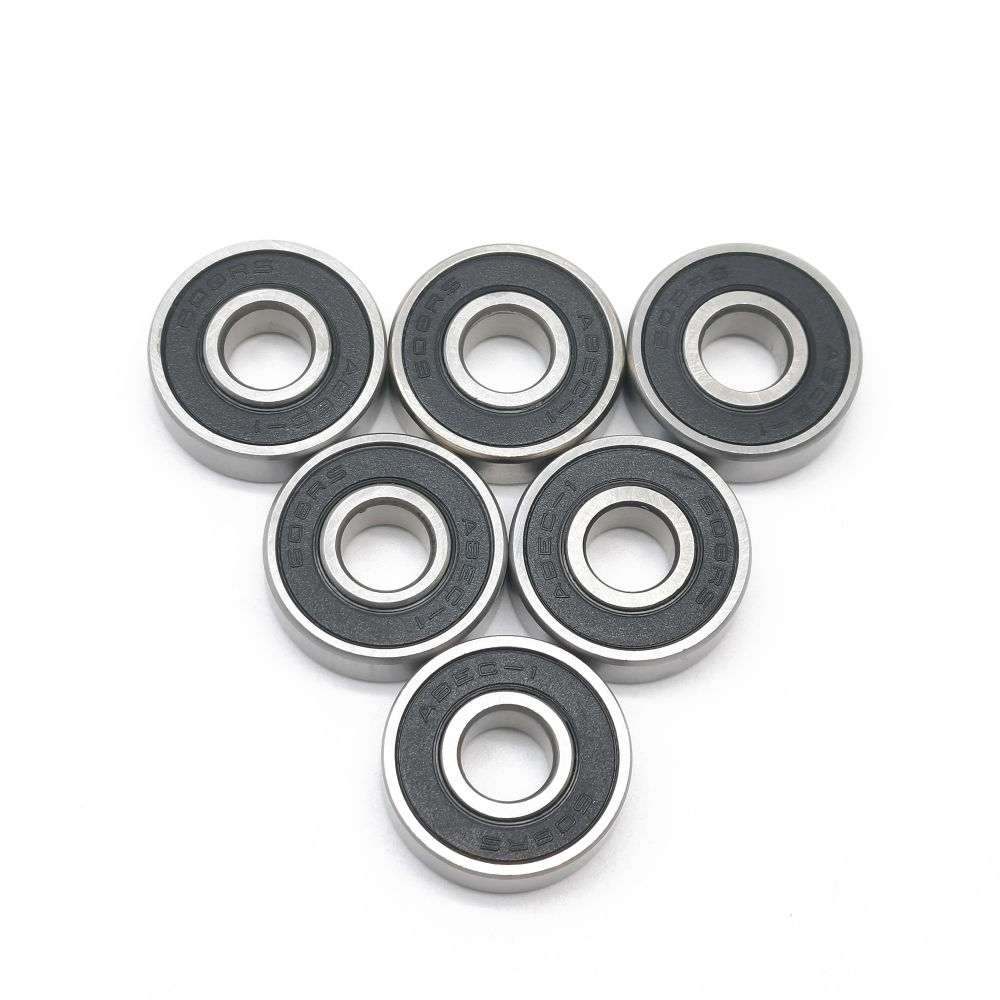


608RS Chrome steel Double Rubber Sealed Deep Groove Ball Bearings
-
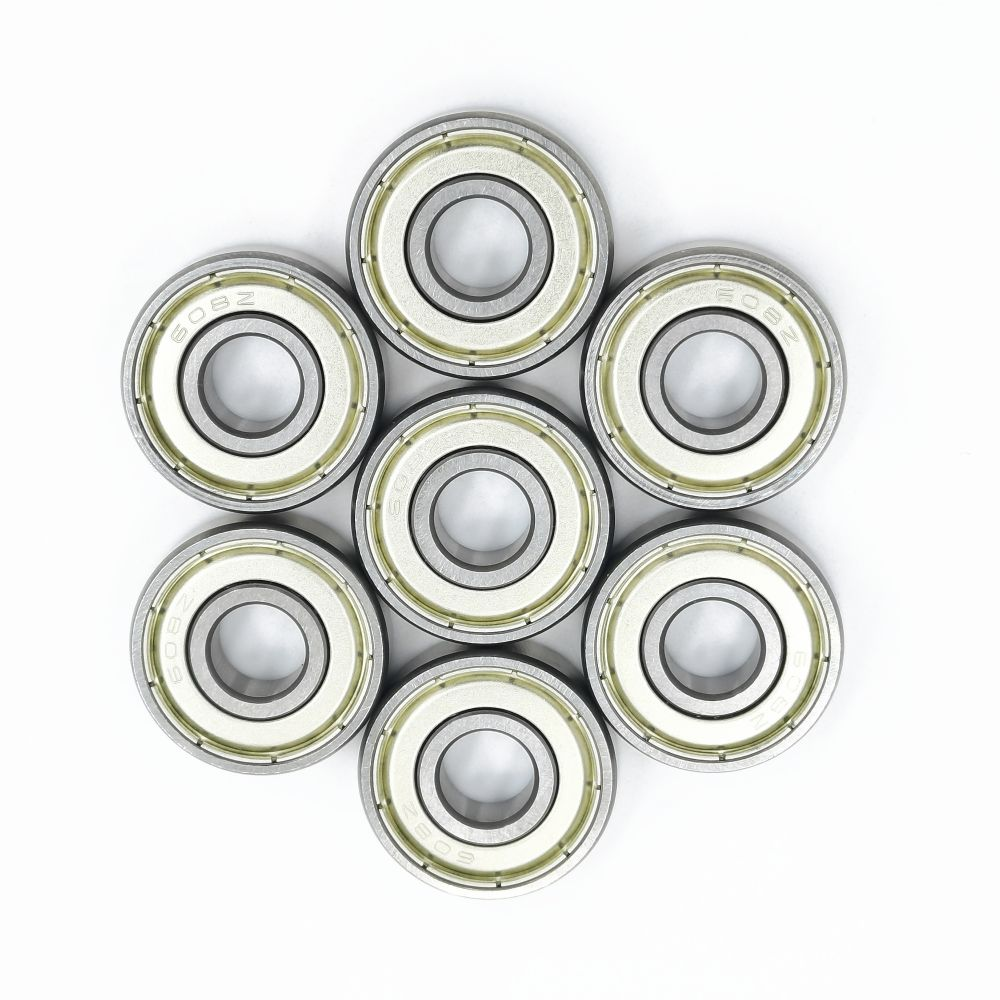
608ZZ Single column Double Iron Sealed Deep Groove Ball Bearing
-
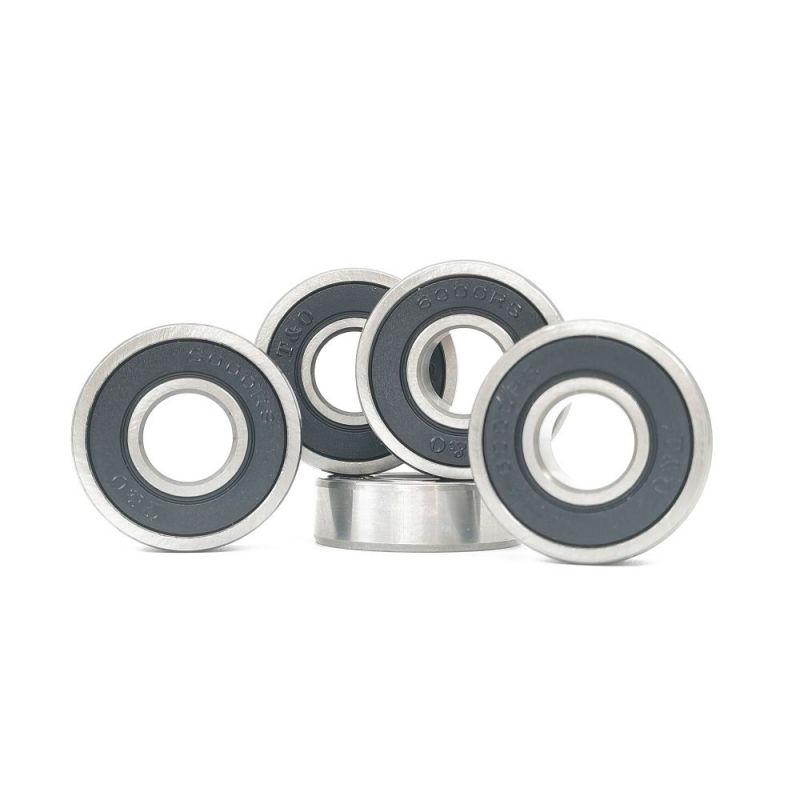
6000RS Carbon steel Double Rubber Sealed Deep Groove Ball Bearings
-
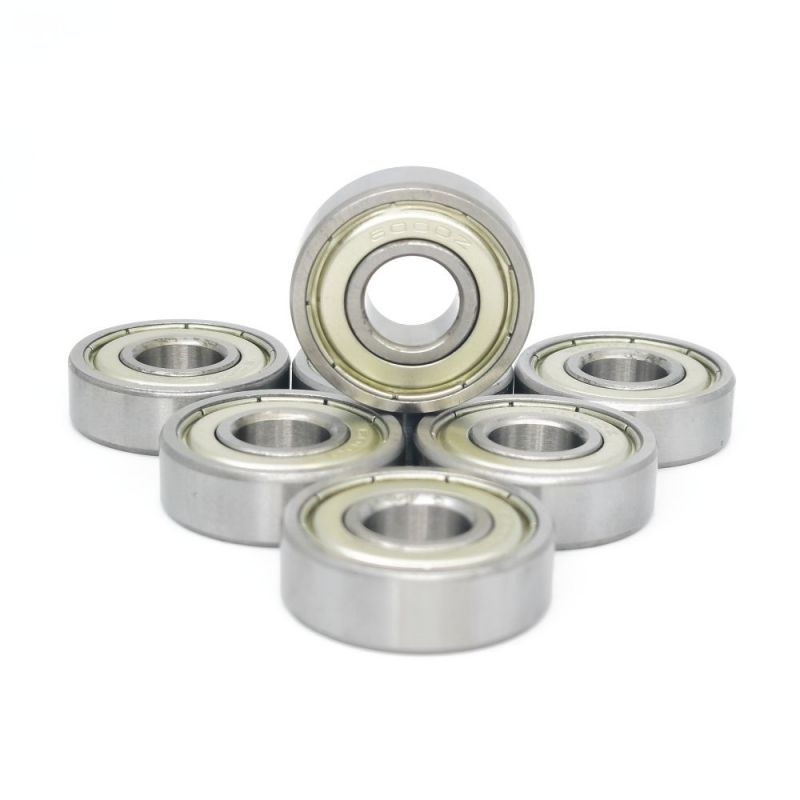
6000ZZ Grease Lubrication Double Iron Sealed Deep Groove Ball Bearing
-
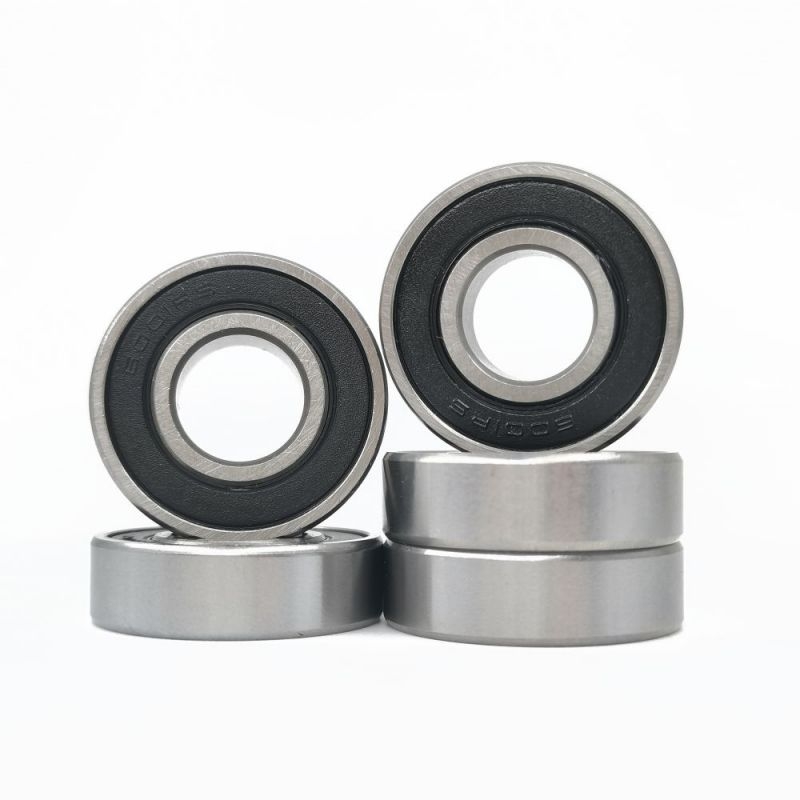
6001RS Double Rubber Sealed Deep Groove Ball Bearings For Motorcycles


Products
CONTACT Us
+86-13362474260 +86-0574-63322565
No. 98 Xinlang Road, Langxia Street, Yuyao City, Zhejiang Province, China
Mobile Site
Copyright© Zhejiang Yingfei Biotechnology Co., Ltd. All Rights Reserved
 Wholesale Motorcycles/Cars Vehicles Bearing Source Factory