
 0
0

 English
 Español
 中文简体
中文简体 عربى
عربى
Industry News
Home / News / Industry News / Why Is Your Car Making That Humming Noise? The Ultimate Guide to Vehicle Bearings

2026-03-23
In automotive engineering, bearings are widely recognized as the "joints of the machine." If the engine is the heart of a vehicle, then bearings are the core supports that ensure all power is transmitted smoothly while minimizing energy loss.
From a physical structure perspective, vehicle bearings are mechanical components designed to convert sliding friction into rolling friction through rolling elements, such as steel balls or rollers. Between any two metal parts rotating relative to each other, the intense friction generated by direct contact would accumulate enough heat to melt or fracture the structure within a very short time.
Load Bearing: Bearings must support the static weight of the vehicle (often several tons) and withstand immense dynamic loads during high-speed cornering and on bumpy roads.
Reducing Friction and Power Loss: High-quality bearings reduce rotational resistance to an almost negligible level, which directly impacts acceleration performance and fuel economy.
Precision Positioning: They ensure that drive shafts, hubs, and transmission gears rotate on a predetermined track, with tolerances typically controlled at the micrometer level.
While specifications vary, standard automotive bearings generally consist of the following structure:
Outer Race: Statically fixed to the subframe, steering knuckle, or transmission housing.
Inner Race: Tightly fitted onto the rotating shaft, such as an axle or half-shaft.
Rolling Elements: The core components, which can be spherical (balls), cylindrical, or tapered rollers.
Cage: Ensures the rolling elements maintain uniform spacing and prevents them from interfering with one another.
Different parts of a car have vastly different requirements for load direction (radial vs. axial) and rotational speed, leading to various specialized bearing types.
These parts directly support the vehicle's weight and are the most common wear items.
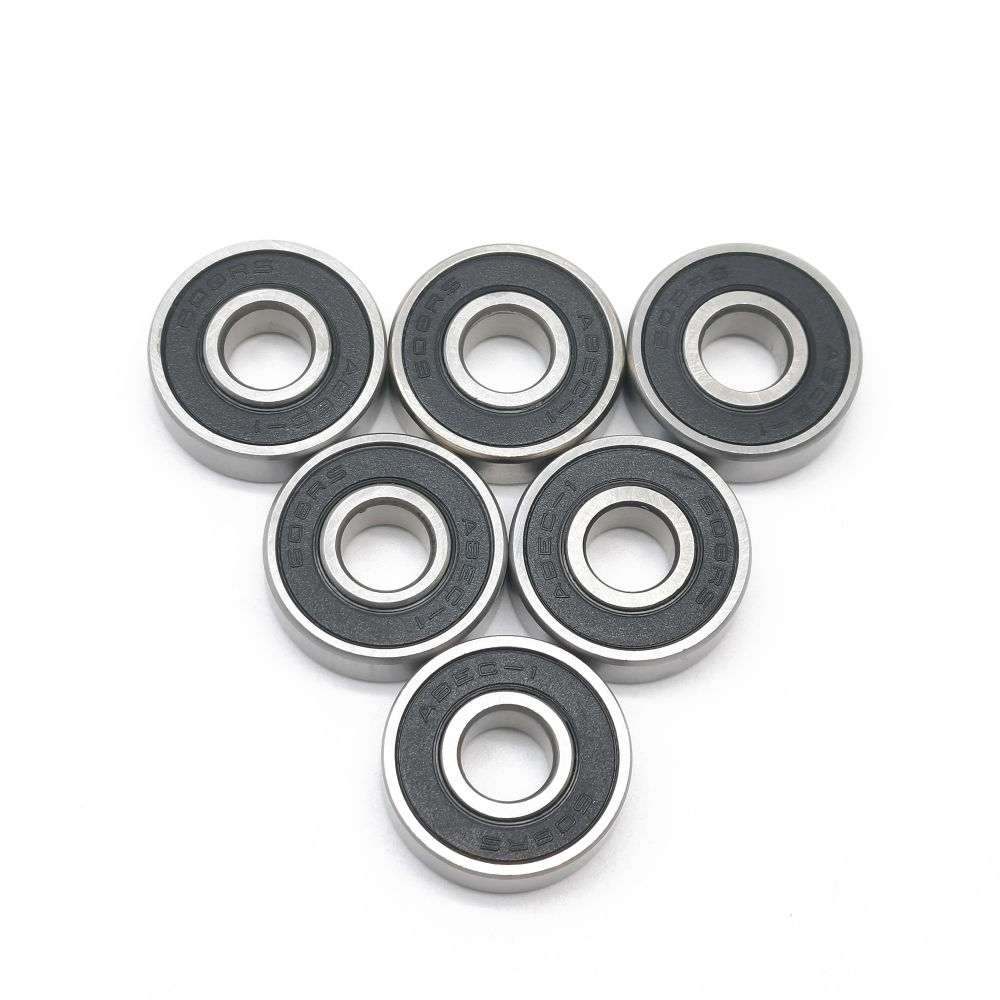
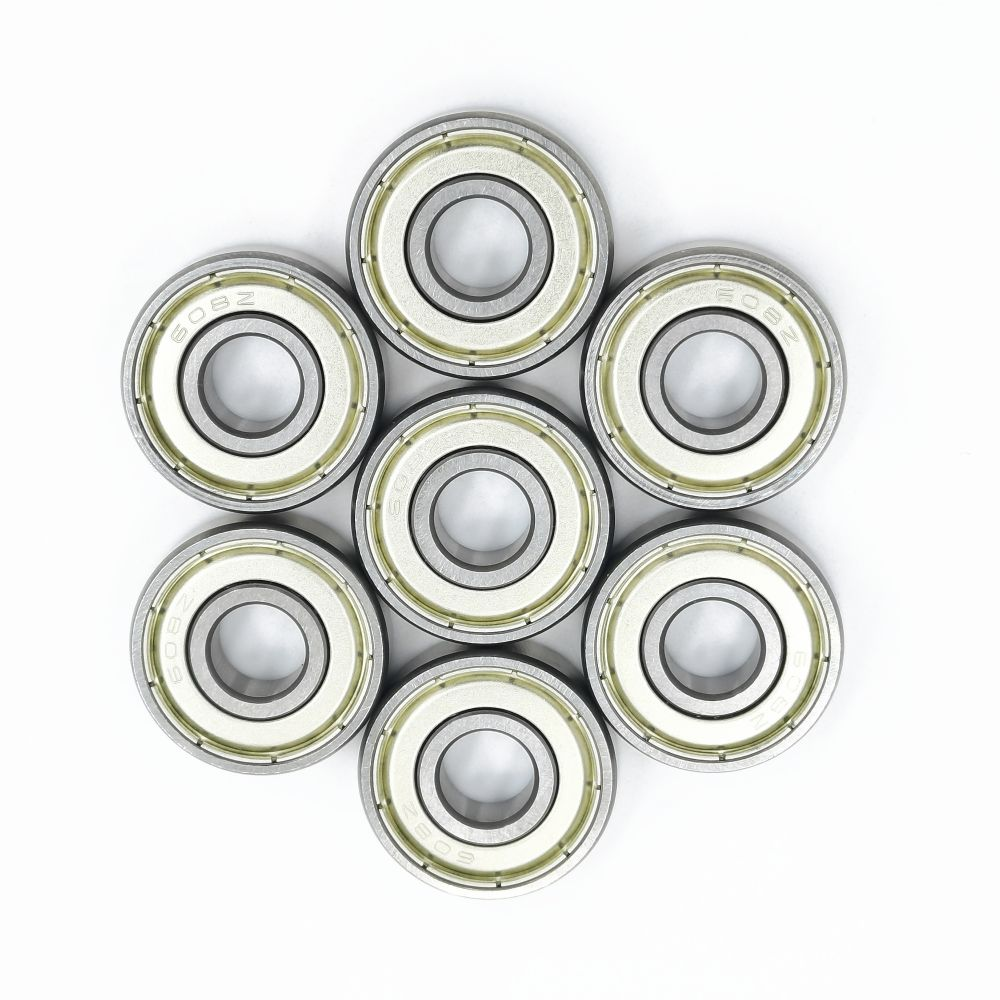
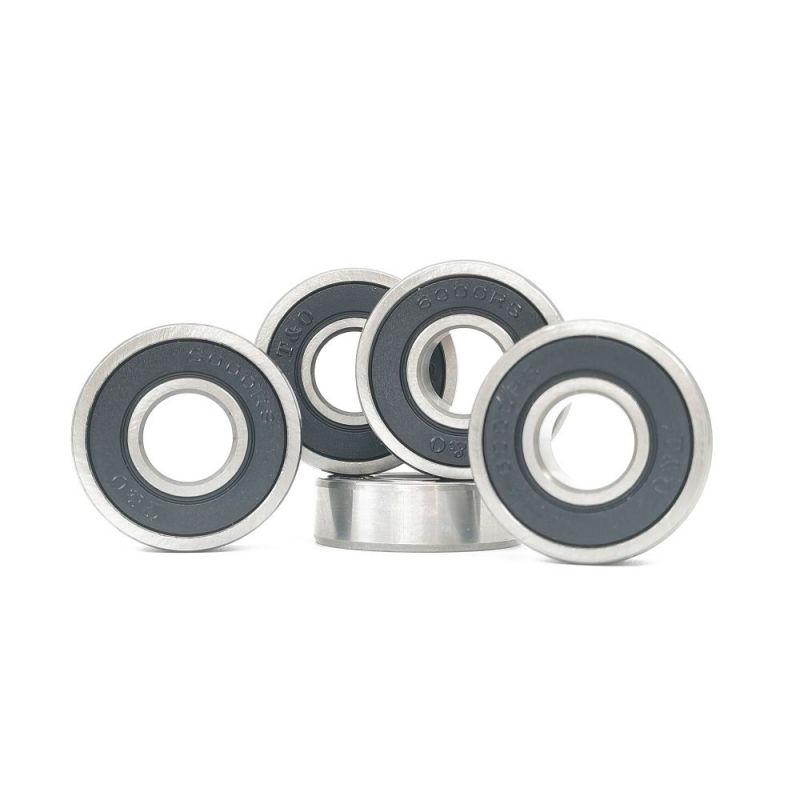
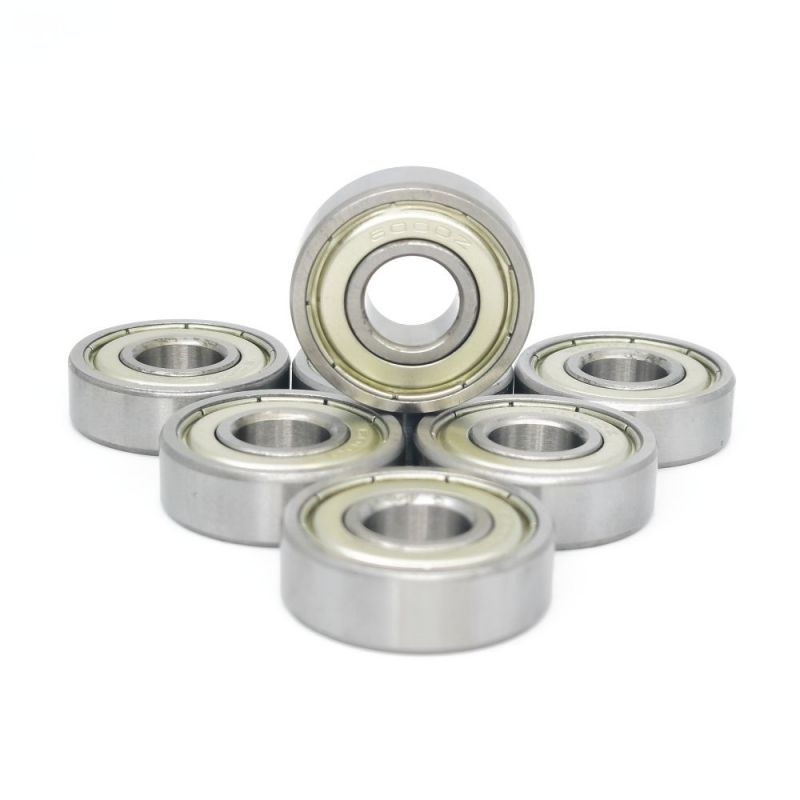
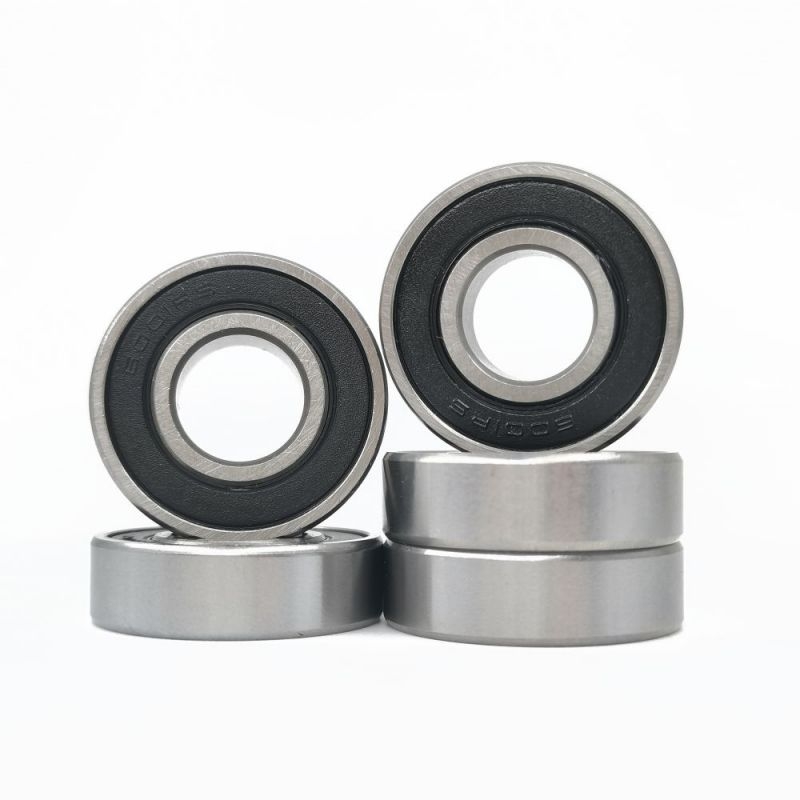
Deep Groove Ball Bearings: Simple in structure with minimal friction, common in small passenger cars sensitive to energy consumption.
Tapered Roller Bearings: The rolling elements are tapered. They can simultaneously handle vertical pressure (radial) and lateral thrust during cornering (axial). These are standard for pickups and heavy-duty SUVs.
Unlike common ball bearings, the interior of the engine (such as the crankshaft and connecting rod journals) uses "plain bearings," often called shells. They rely on a hydrodynamic film formed by oil pressure for support.
Needle Roller Bearings: The rolling elements resemble thin steel needles. They have an extremely small radial size, allowing them to fit into the tight spaces within transmission gear sets.
Thrust Bearings: Specifically designed to withstand pressure parallel to the shaft's axis, commonly found at the base of steering gears or in clutch release mechanisms.
| Bearing Type | Main Load Direction | Limit Speed | Shock Resistance | Typical Application |
| Deep Groove Ball | Primarily Radial | Very High | Average | Alternators, Cooling Fans |
| Tapered Roller | Radial + Axial | Medium | Very Strong | SUV/Truck Hubs, Differentials |
| Needle Roller | Radial Only | High | Good | Transmission Gears, Rod Ends |
| Thrust Ball | Axial Only | Low | Average | Clutch Release, Steering Column |
| Plain Bearing | Radial | Depends on Oil Pressure | Very Strong | Engine Crankshaft, Rod Mains |
Understanding the "generational" differences in wheel bearings is crucial for judging repair costs.
Generation 1 (Gen 1): Independent double-row angular contact bearings. They require a hydraulic press to be installed into the steering knuckle. They lack flanges and require high technical skill for installation.
Generation 2 (Gen 2): The outer race integrates a mounting flange. It can be bolted directly to the vehicle body, reducing installation errors and improving overall rigidity.
Generation 3 (Gen 3): The current mainstream technology. Both inner and outer races have flanges, and an ABS sensor ring is built-in. This integrated design maximizes precision but means the entire expensive hub unit must be replaced if the bearing fails.
Bearing failure does not happen instantly; it goes through a process from "micro-cracks" to "metal spalling." Early risks can be identified through the following methods.
Abnormal Noise (Growling/Humming): A bad bearing emits a continuous, low-pitched humming sound.
Characteristics: The noise increases in frequency with vehicle speed. Unlike engine noise, the bearing sound persists even when coasting in neutral.
Load Transfer Test: This is a professional diagnostic trick. On an open road, gently weave the steering wheel (serpentine driving). If the noise gets louder when turning left and quieter when turning right, it suggests the right-side wheel bearing, which is under greater load, may be failing.
When the internal raceways of a bearing develop pits or spalling, the rotation is no longer smooth, and this micro-vibration is transmitted through the suspension.
High-Speed Shaking: Similar to an unbalanced wheel, but the vibration is accompanied by a resonance from metal friction.
Steering Play: Excessive internal clearance in the bearing allows the tire to wobble irregularly during driving, making the steering feel vague or imprecise.
Lift the vehicle until the wheel is off the ground.
Rotation Method: Spin the wheel rapidly by hand. A healthy bearing is almost silent and spins smoothly; a bad bearing will make a rough grinding sound and stop spinning quickly.
Wobble Method: Grasp the tire at the 12 o'clock and 6 o'clock positions and shake it up and down. If there is a noticeable "gap" or a clicking sound, the bearing has sustained physical wear.
The answer is clearly: No.
Many owners believe a noisy bearing is just a nuisance and does not affect driving. This perception is extremely dangerous for several reasons:
Extreme Heat and Seizing: Frictional force increases exponentially in a damaged bearing. At high speeds, internal temperatures can exceed 200 degrees Celsius. This carbonizes the grease and causes the rolling elements to "weld" to the races, leading to an instantaneous wheel lock-up.
Wheel Detachment: The bearing is the physical link between the wheel and the vehicle. If the bearing disintegrates completely, the hub flange may separate from the steering knuckle, causing the wheel to fly off.
Safety System Failure: Modern ABS, ESP, and Traction Control systems rely on the sensor rings located on the bearings. A wobbling bearing causes incorrect sensor signals, which can disable electronic assistance during emergency braking.
A: Bearing life is affected by several abnormal factors: Driving Through Water (water can penetrate the seals and emulsify the grease), Severe Impact (hitting speed bumps or deep potholes), and Wheel Modifications (changing the wheel offset alters the lever arm force beyond original design).
A: For Gen 1 and some Gen 2 bearings, because the steering knuckle or strut connection must be disassembled, an alignment is mandatory. For bolt-on Gen 3 bearings, it depends on the vehicle structure, but an alignment check is always wise.
A: Most modern wheel bearings are sealed and pre-filled with high-performance synthetic grease. Maintenance-free means you cannot manually add grease; once the seal fails or the grease dries out, the only solution is a complete replacement.
A: Inferior products often use steel that contains internal impurities. Under cyclic stress, these materials develop fatigue cracks easily, and their seal materials are often not heat-resistant, leading to grease leakage.


Products
CONTACT Us
Mobile Site
Copyright© Zhejiang Yingfei Biotechnology Co., Ltd. All Rights Reserved
 Wholesale Motorcycles/Cars Vehicles Bearing Source Factory