
 0
0

 English
 Español
 中文简体
中文简体 عربى
عربى
Industry News
Home / News / Industry News / What specific effects does the clearance adjustment of single-row double-sealed deep groove ball bearings have on their operating performance

2025-12-22
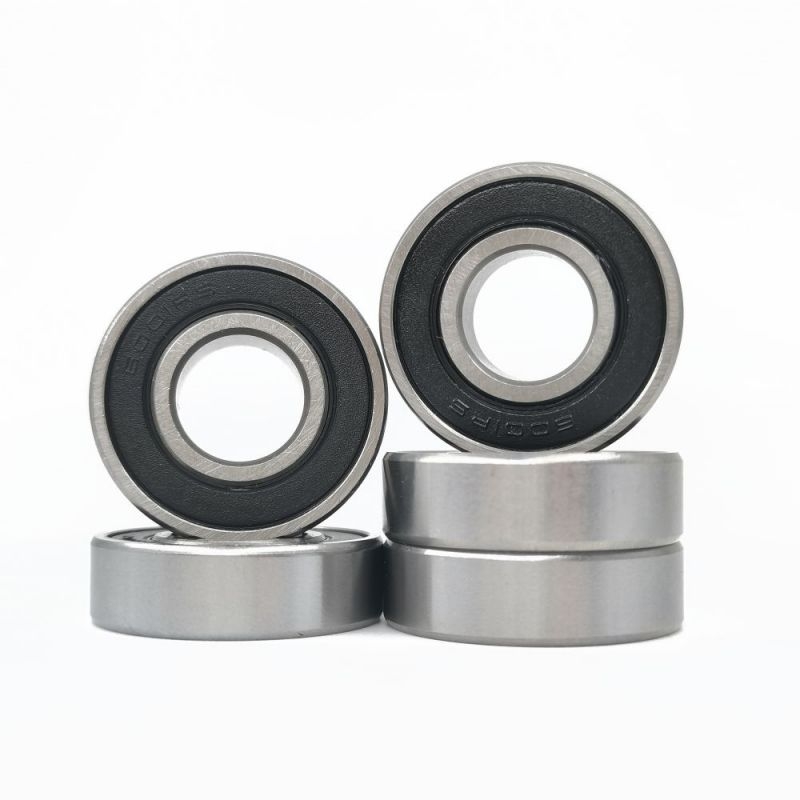
Single-row double iron sealed deep groove ball bearings are widely used in motors, automotive wheel hubs, fans, and industrial machinery. Their performance and service life directly affect the overall operational efficiency of equipment. In bearing design and installation, clearance adjustment plays a crucial role in determining operational performance. Clearance refers to the allowable relative movement between the inner and outer rings of a bearing, either in the radial or axial direction. Proper clearance adjustment ensures reliability and durability of bearings under various working conditions.
Clearance is mainly divided into radial and axial clearance. Radial clearance refers to the movement of the rolling elements in the radial direction, while axial clearance is the gap along the shaft axis. Single-row double iron sealed deep groove ball bearings primarily focus on radial clearance, as they are designed to withstand radial loads and certain axial loads. Clearance can be controlled through manufacturing tolerances or adjusted during installation through preloading or fitting techniques.
The size of the clearance directly affects frictional heat generation and temperature rise during operation. Excessively small clearance causes tight contact between rolling elements and raceways, increasing friction and heat, which accelerates grease aging and seals wear. Excessively large clearance leads to unstable rolling element movement, causing local impact and vibration. While temperature rise may not be significant in this case, bearing life and operational stability are affected. Accurate clearance adjustment balances lubrication and friction, controlling temperature rise and enhancing reliable operation.
Radial clearance determines how the rolling elements share the load on the raceways. Small clearance concentrates forces on certain rolling elements, increasing the risk of contact fatigue and surface pitting. Large clearance causes uneven load distribution, leading to local impacts and higher vibration. Appropriate clearance ensures uniform load distribution, prolongs bearing life, and reduces maintenance requirements, improving overall operational stability.
Clearance adjustment plays a critical role in controlling vibration and noise. Small clearance increases friction and rolling resistance, resulting in higher vibration levels and pronounced noise. Large clearance may cause rolling elements to strike the raceway intermittently, producing low-frequency vibrations and intermittent noise. Precise clearance adjustment allows single-row double iron sealed deep groove ball bearings to operate quietly and smoothly, making them suitable for noise-sensitive applications, such as electric motors, household appliances, and precision machinery.
The double iron seal design provides dust and moisture protection and ensures proper lubrication retention. Small clearance may over-compress the seal during installation, increasing friction and reducing sealing efficiency. Large clearance may prevent the seal from contacting properly, allowing contaminants to enter and compromise bearing life and reliability. Correct clearance adjustment ensures proper seal function, maintaining lubrication and protection over the long term.
In motor and fan industries, clearance is selected based on temperature variations and load characteristics. In high-temperature or high-speed conditions, slightly increasing clearance can prevent bearing seizure due to thermal expansion. In low-temperature environments, reducing clearance minimizes vibration and noise caused by excessive gaps. Proper clearance adjustment not only improves equipment performance but also reduces maintenance costs and enhances production efficiency.


Products
CONTACT Us
Mobile Site
Copyright© Zhejiang Yingfei Biotechnology Co., Ltd. All Rights Reserved
 Wholesale Motorcycles/Cars Vehicles Bearing Source Factory