
 0
0

 English
 Español
 中文简体
中文简体 عربى
عربىSuitable for High-Speed Operation
The simple raceway and ball arrangement creates relatively low friction, making this bearing type suitable for motors, fans, pumps and transmission systems.

2026-07-06
Ball bearings support rotating shafts, reduce friction, control movement and help mechanical equipment operate with consistent speed and accuracy. This technical guide explains ball bearing construction, deep groove ball bearing performance, manufacturing processes, selection parameters, common failures and vehicle safety concerns.
Convert sliding contact into controlled rolling motion.
Carry radial loads and selected levels of axial load.
Maintain shaft position, alignment and rotational accuracy.
Help stabilize moving components under suitable operating conditions.
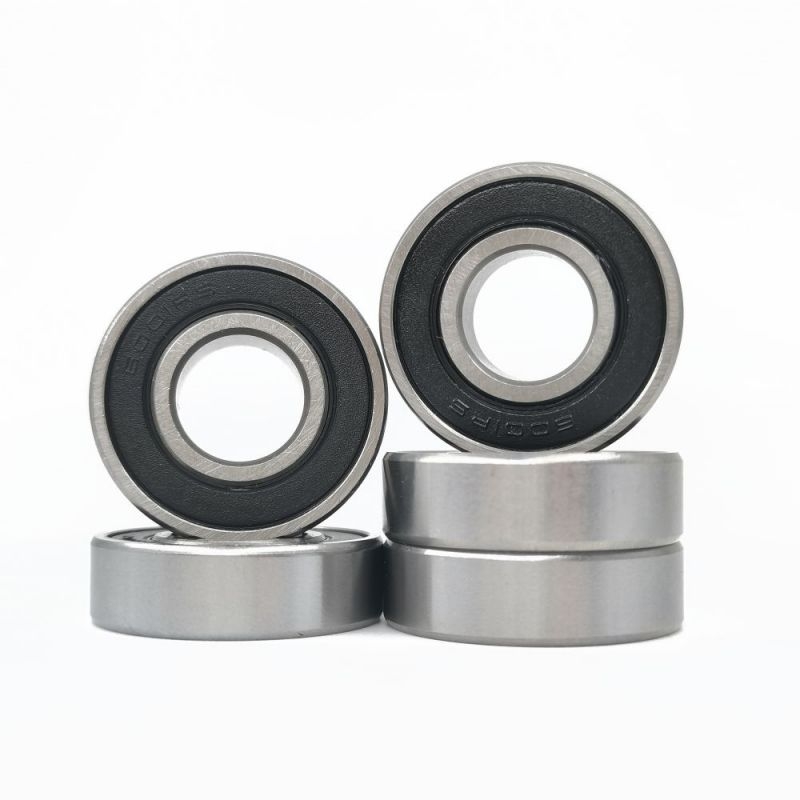
A ball bearing is a complete rolling-element assembly installed between a rotating shaft and a stationary housing. It normally contains an inner ring, an outer ring, precision balls, a cage, lubricant and, when required, shields or seals.
The inner and outer rings contain carefully ground raceways. As the shaft rotates, the balls roll between these raceways. The rolling action produces less friction than direct sliding contact, allowing the shaft to rotate more efficiently.
The terms balls and bearings describe two related but different elements. Balls are the individual rolling elements. Bearings are the complete assemblies that position and control those balls. The search phrase bearing ball bearing usually refers to a rolling bearing that uses spherical rolling elements rather than cylindrical or tapered rollers.
Fits around the shaft and normally rotates with it.
Fits inside the housing and provides the outer raceway.
Transfer loads while producing low-friction rolling contact.
Separates the balls and maintains uniform spacing.
Reduces the entry of dust, water and external contaminants.
Forms a protective film between balls and raceways.
A deep groove ball bearing has continuous raceway grooves with a relatively deep profile. The groove geometry provides close contact with the balls, enabling the bearing to carry radial load and a limited axial load in either direction.
The simple raceway and ball arrangement creates relatively low friction, making this bearing type suitable for motors, fans, pumps and transmission systems.
The bearing primarily carries radial load while also supporting moderate axial forces when alignment and installation conditions are controlled.
The integrated structure provides useful load capacity without requiring a complicated housing or a large axial installation space.
Shielded and sealed versions can retain lubricant and reduce contamination, lowering routine maintenance requirements.
Accurate raceways, controlled ball diameter variation and suitable lubricant help reduce vibration and operating noise.
Deep groove designs are used in electric motors, agricultural equipment, conveyors, household machinery, gear systems and vehicle components.
The question what is the ball bearing's potential concerns the performance a bearing can deliver when its design, material, accuracy and lubrication are matched to the operating environment. Bearing potential cannot be evaluated by external dimensions alone.
Two ball bearings with the same bore, outside diameter and width may have different load ratings, speed limits, accuracy levels, seals and internal clearances. Selection should be based on the complete operating condition rather than the shaft diameter alone.
The question how are ball bearings made involves several precision processes. Bearing quality depends on consistent material treatment, accurate machining, controlled heat treatment and detailed finished-product inspection.
Bearing steel is cut into ring blanks. Forged, turned or tube-cut blanks may be used depending on size, production volume and structural requirements.
Inner diameter, outer diameter, side faces, raceway profiles and chamfers are machined while leaving controlled material for later grinding.
Rings and balls are hardened and tempered to obtain the hardness, dimensional stability and contact-fatigue resistance required for rolling contact.
Grinding controls groove radius, roundness, dimensional accuracy and raceway surface condition.
Steel wire is formed into ball blanks. Flash removal, heat treatment, grinding, lapping and polishing produce accurate spherical surfaces.
Raceway surfaces receive additional finishing to reduce microscopic peaks, friction, noise and local contact stress.
Rings, balls and cages are cleaned before assembly. Balls are positioned in the raceways and separated by the cage.
Lubricant is added according to the design. Finished bearings are checked for clearance, vibration, noise, rotation, dimensions and sealing condition.
| Parameter | Technical Meaning | Selection Impact |
|---|---|---|
| Bore diameter | Diameter of the bearing hole fitted to the shaft | Determines the basic shaft size |
| Outside diameter | External ring diameter fitted into the housing | Determines housing dimensions |
| Width | Axial dimension of the complete bearing | Affects mounting space and structural support |
| Dynamic load rating | Reference capacity under rotating load | Used when estimating fatigue life |
| Static load rating | Reference capacity under stationary or slow movement | Helps evaluate permanent deformation risk |
| Speed rating | Reference operating-speed limit under specified conditions | Influenced by lubricant, cage, seal and temperature |
| Radial clearance | Internal radial movement before installation | Affects temperature, noise, preload and thermal expansion |
| Accuracy class | Dimensional and rotational tolerance level | Influences runout, vibration and positioning accuracy |
| Seal configuration | Open, metal-shielded or contact-sealed design | Balances protection, friction and speed |
| Lubrication method | Grease, oil bath, oil circulation or other suitable method | Affects cooling, maintenance and operating life |
The question How do you know if you need ball bearings can be answered by examining how the machine moves and how the shaft is loaded. Ball bearings are commonly suitable when equipment requires low-friction rotation, relatively high speed, compact installation and controlled radial movement.
Suitable for clean equipment where external lubrication is available and higher rotational speed is required.
Helps reduce the entry of larger particles while maintaining relatively low rotational resistance.
Designed for equipment exposed to dust, moisture or limited maintenance access, with added sealing resistance.
May indicate lubricant deterioration, raceway wear, incorrect fit or increased internal clearance.
May be associated with raceway pitting, ball damage, contamination or localized material flaking.
May result from seal contact, loss of lubrication, cage damage or foreign particles inside the bearing.
Can be caused by excessive grease, insufficient clearance, overload, misalignment or an overly tight fit.
May indicate damaged balls, raceway defects, looseness, imbalance or housing deformation.
Excessive movement may result from internal wear, incorrect fit or damage to the shaft and housing seats.
The question Can I drive with a bad ball bearing commonly refers to a damaged wheel bearing. A worn wheel bearing can increase wheel movement, reduce steering stability, affect wheel-speed signals and cause abnormal heat near the hub.
Severe internal damage may lead to rapid raceway deterioration, increased hub clearance, wheel wobble or rotational resistance. The vehicle should be inspected promptly when symptoms appear.
A humming or grinding sound increases with vehicle speed.
The noise changes when the vehicle turns left or right.
The steering wheel, floor or body develops unusual vibration.
The wheel or hub area becomes noticeably hotter than normal.
The tire shows uneven wear or the wheel has excessive free movement.
A wheel-speed or related warning appears on the instrument panel.
Keep the bearing, shaft, housing and tools free from abrasive dust, chips, moisture and contaminated lubricant.
Apply force only to the ring being fitted. Do not transmit installation force through the balls and raceways.
Avoid loose fits that allow ring creep and excessively tight fits that remove necessary internal clearance.
Too little lubricant can break down the protective film. Too much grease can increase churning resistance and temperature.
Check shaft straightness, housing alignment, shoulder geometry and mounting surface accuracy.
Avoid prolonged overload, excessive speed, repeated impact and operation outside the lubricant temperature range.
Accurate selection requires more than a bearing number. Shaft dimensions, load direction, speed, temperature, seal requirement, lubricant, installation fit and service environment should be evaluated together.


Products
CONTACT Us
Mobile Site
Copyright© Zhejiang Yingfei Biotechnology Co., Ltd. All Rights Reserved
 Wholesale Motorcycles/Cars Vehicles Bearing Source Factory