
 0
0

 English
 Español
 中文简体
中文简体 عربى
عربى
Industry News
Home / News / Industry News / Technical Analysis: Impact of Mounting Processes on Deep Groove Ball Bearings Performance and Longevity

2026-01-26
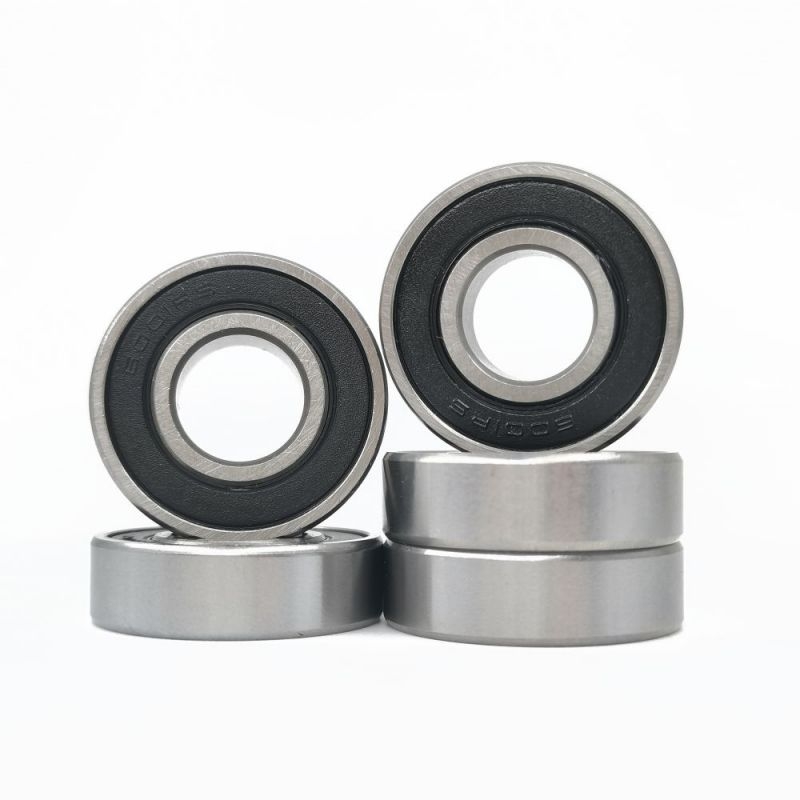
In the assembly of Deep Groove Ball Bearings, the most fundamental principle is that mounting force must never be transmitted through the rolling elements. When force is applied to the ring that does not have the Interference Fit, the pressure passes through the balls directly into the raceway. This instantaneous mechanical overload causes microscopic permanent indentations on the raceway surface, known as Brinelling. Vibration Chain Reaction: These indentations disrupt the geometric integrity of the raceway, inducing high-frequency vibrations during operation, often referred to as mounting noise. Life Reduction: As rolling elements pass over these indentations, the resulting impact forces accelerate Contact Fatigue, leading to premature spalling in bearings that were otherwise rated for tens of thousands of hours.
The choice of mounting technology usually fluctuates between Induction Heating and Cold Pressing, each leaving a distinct fingerprint on the bearing's internal stress state. Induction Heating and Residual Stress: For larger Deep Groove Ball Bearings, induction heating is the preferred professional method. By controlling the temperature—typically not exceeding 120 degrees Celsius—the inner ring expands thermally. This process significantly reduces the tangential residual stress caused by mechanical squeezing. Research indicates that heat-mounted bearings exhibit a more uniform contact stress distribution between the inner ring and the shaft journal. Cold Pressing and Alignment Challenges: Mechanical or hydraulic cold pressing requires the use of specialized mounting sleeves. The primary risk here is Misalignment. Even a deviation of 0.05 degrees can cause Edge Loading, where the balls exert excessive pressure on the margins of the raceway. Furthermore, if the shaft is not lubricated or the interference is too tight, cold pressing can cause Scoring, creating fine metal debris that acts as an abrasive agent during initial startup.
The Residual Clearance of Deep Groove Ball Bearings after installation is the critical factor determining operating temperature and friction. Interference Contraction Effect: When the inner ring is pressed onto a shaft, the inner raceway diameter expands radially. Generally, the loss of radial internal clearance is approximately 70% to 90% of the effective interference magnitude. Internal Clearance Selection: If the application requires a heavy interference fit for high-load stability, bearings with C3 or C4 clearance classes must be pre-selected. Ignoring this mounting impact leads to Negative Clearance, causing a rapid rise in friction and potential thermal seizure shortly after commissioning.
Bearing rings are precision thin-walled components, meaning the final roundness of the raceway is often dictated by the geometric accuracy of the shaft or housing. Ovality Inheritance: If a shaft journal possesses Ovality, the mounted inner ring raceway will inherit this irregular shape. This causes the balls to experience alternating load fluctuations—from minimum to maximum—within a single revolution. Load Distribution Distortion: This distortion concentrates stress on specific zones rather than distributing it evenly across the load zone, significantly shortening the calculated fatigue life of the Deep Groove Ball Bearings. Proper installation specifications must include a metrological check of the mating parts to ensure they meet the ISO tolerance grades required for high-precision rotation.


Products
CONTACT Us
Mobile Site
Copyright© Zhejiang Yingfei Biotechnology Co., Ltd. All Rights Reserved
 Wholesale Motorcycles/Cars Vehicles Bearing Source Factory