
 0


 English
 Español
 中文简体
 عربى
Industry News
Home / News / Industry News / Nylon vs Stainless Steel Door Rollers: Key Differences & How to Choose

2026-10-26
The difference between nylon and stainless steel door rollers goes beyond the visible wheel. Nylon materials absorb vibration and reduce rolling noise, while stainless steel materials provide rigidity and corrosion resistance that nylon cannot match. In our bearing plant, we produce both configurations, so the question we hear most from engineers and maintenance teams is not which material is stronger, but which one will stay reliable in a specific door system.
Nylon rollers are the preferred choice for quiet residential patio doors, internal partition doors, and light commercial applications. Stainless steel rollers are the preferred choice for heavy sliding doors, high-frequency use, industrial doors, and coastal environments where humidity and salt quickly attack ordinary steel. Neither material is a universal winner. The performance of the roller depends on the wheel material, the bearing inside, the track material, and the installation quality.
The chart below shows how the two material families compare on several practical factors. The values are relative; actual performance changes with bearing quality, door weight, and maintenance habits.
Read the factors, not the labels. A stainless steel roller with poor bearing seals can fail sooner than a nylon roller with a properly sealed bearing. A nylon roller with too much internal clearance will wobble even if the outer material looks perfect.
Door rollers look simple, but they are a combination of several parts that must work together.
The pressure between the wheel and the track is a rolling contact. If the wheel is too hard, the track wears. If the wheel is too soft, it deforms and creates higher rolling resistance. This is why the outer material cannot be selected independently of the track material and the bearing.
A typical door roller bearing operates at low speed but under constant load. It does not need high speed capability, but it does need clean raceways, correct internal clearance, and a seal that blocks dust and moisture. In our factory, door roller bearings are made with the same precision as motor bearings because the failure mode is similar: contamination and uneven wear.
Nylon has been used for sliding door rollers for decades because it handles the actual operating conditions better than most visible metal wheels. Nylon provides a lower coefficient of friction against aluminum tracks, so the door starts moving with less force. It also has natural damping; when the door passes over a track joint or a small obstruction, the nylon absorbs the impact instead of transmitting it to the frame.
For residential projects, nylon rollers are often selected because the sound level matters as much as the load capacity. A patio door opened early in the morning should not wake the household. Nylon also protects the track: because it is softer than stainless steel or aluminum, it does not scratch or cut the track surface. This is especially important for aluminum tracks, which can be scored by harder metal wheels.
Nylon does have limits. It is not as stiff as steel, so a very heavy door can cause permanent deformation or flat spots. Continuous exposure to high humidity can change its dimensions and hardness. If the roller uses a cheap bearing, the nylon wheel can rotate smoothly on its outside while the bearing inside wears quickly.
We produce plastic-coated ball bearing rollers that combine a quiet outer surface with a sealed bearing core designed for door applications. This construction reduces the risk of the wheel separating from the bearing and improves the overall service life.
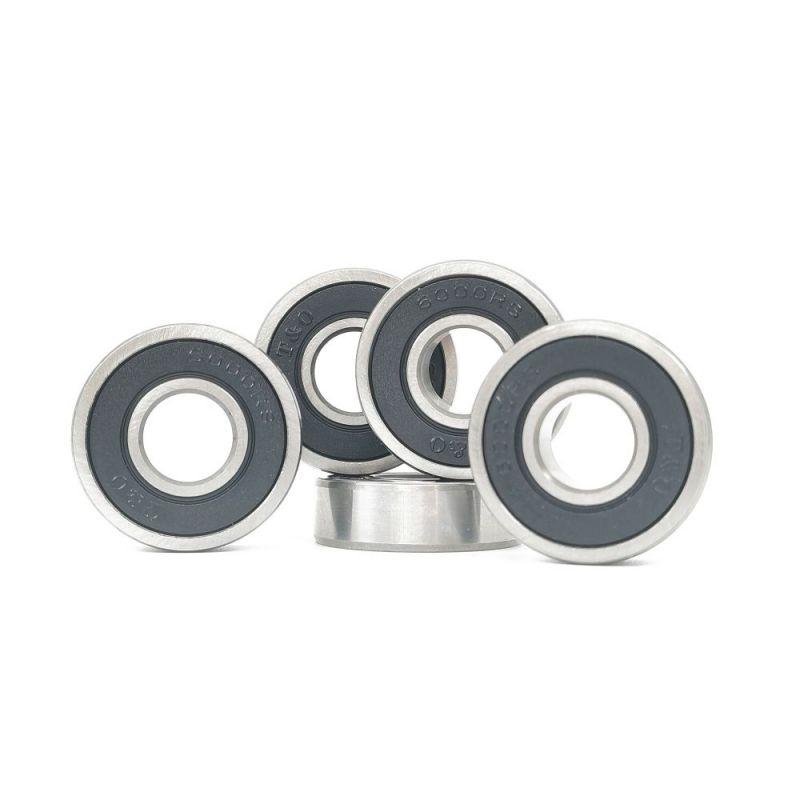
 Plastic-coated deep groove ball bearings BS60826-7This plastic-coated bearing combines a quiet outer layer with a sealed bearing core. Designed for applications such as electric motors, home appliances, and furniture, it offers superior noise reduction and durability compared to stainless steel alternatives.View Product →
Stainless steel rollers are used where nylon cannot handle the mechanical or environmental load. The high elastic modulus of stainless steel means the wheel does not deform under heavy panels. It keeps its roundness over time, which helps the bearing run with a consistent clearance. Stainless steel also has a smooth surface that produces low rolling friction on stainless steel tracks.
In industrial and commercial doors, stainless steel wheels are often the only practical choice. Doors with fire-rated frames, heavy glass panes, or frequent daily cycles benefit from a material that will not creep or flatten. Stainless steel is also common in coastal cities and food-processing areas, because it resists rust far better than carbon steel. However, the corrosion resistance depends on the grade. AISI 304 is the standard choice for general moisture resistance; AISI 440C is used when hardness and wear resistance are also required. We use AISI 304 stainless steel bearings for most door roller requirements because the bearing inside must be corrosion-resistant too. The bearing is the part that fails first if water penetrates through the seals.
The main drawback of stainless steel is noise. Metal-on-metal contact with aluminum tracks can be annoying. The wheel can also transfer track vibration directly to the door frame. Stainless steel rollers need a precision bearing and a clean track to operate silently.
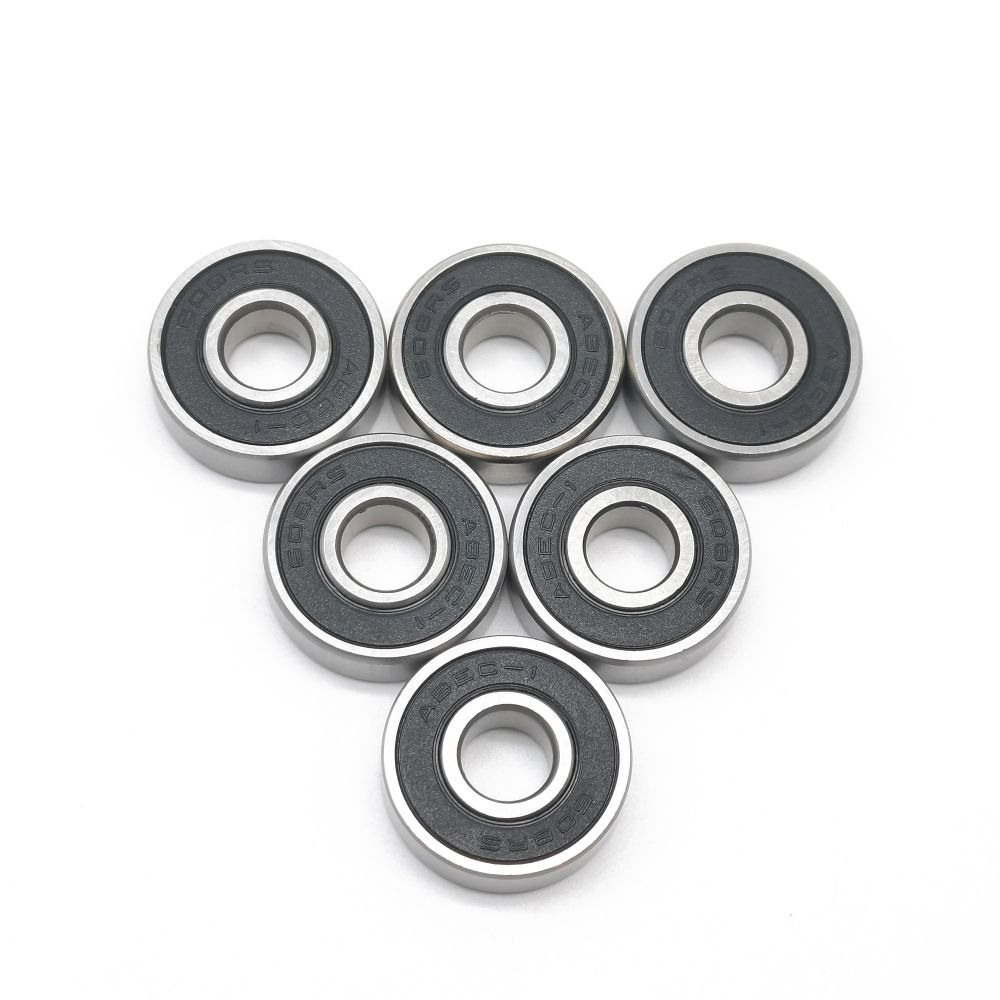
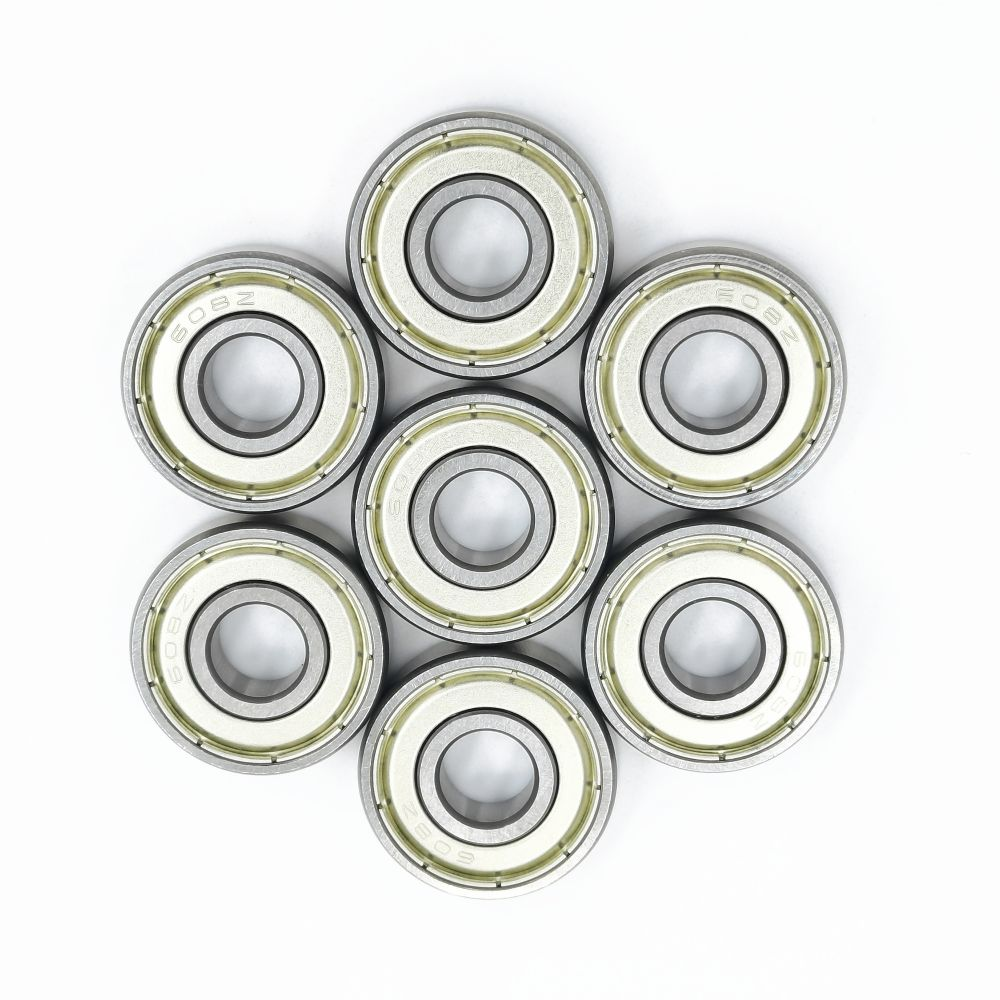
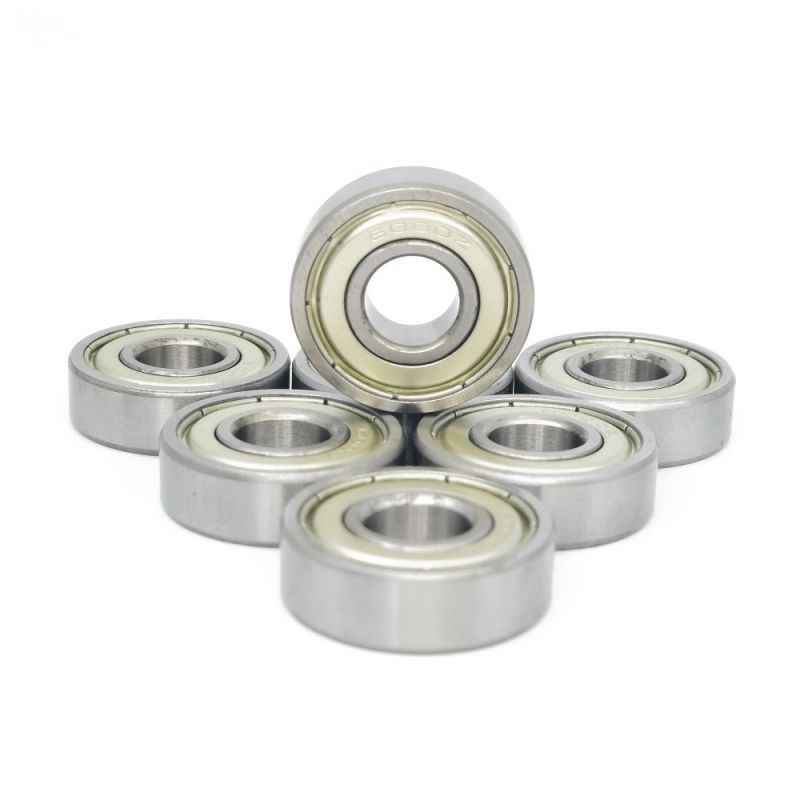
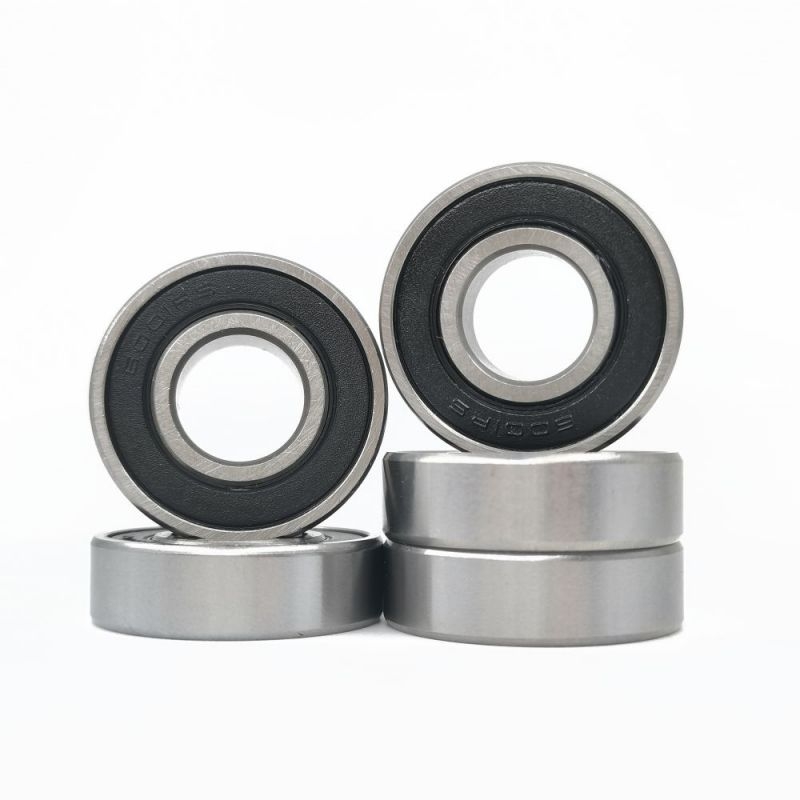
 Stainless Steel Deep Groove Ball Bearing S608RS
The following table summarizes the difference between nylon and stainless steel door rollers from a practical selection point of view. Actual values depend on door weight, track condition, bearing quality, and seal design.
| Factor | Nylon | Stainless Steel |
|---|---|---|
| Noise level | Low | Moderate to high |
| Load capacity | Moderate | High |
| Corrosion resistance | Good; unaffected by water | Excellent with 304/440C grade |
| Track wear | Low | Higher on soft tracks |
| Rolling resistance | Low on aluminum | Low on steel, depends on contact |
| Temperature range | Approximately -20 to 80C | Wide, above 200C in most grades |
| Weight | Light | Heavy |
| Resistance to deformation | Can flatten under overload | Holds shape under load |
Nylon absorbs vibration and is generally the quieter outer material. If noise is your primary concern, start with nylon.
Stainless steel maintains its roundness under heavy panels. Choose stainless when the door is massive or used frequently.
Stainless steel wheels and stainless steel bearings resist salt. Nylon is fine for humidity but cannot protect the bearing shaft.
Nylon is softer and will not score aluminum tracks. Stainless steel can cut into a soft or damaged track.
After years of inspecting returned rollers, we have found that more failures come from the bearing than from the outer material. A nylon wheel with a cracked race or a stainless wheel with contaminated grease will both fail, but the failure pattern looks different. The outer material determines how the roller feels when it contacts the track. The bearing determines whether the roller keeps rotating after thousands of cycles.
Three bearing specifications dominate performance for door rollers. The first is radial internal clearance. If the clearance is too large, the wheel wobbles and creates uneven pressure between the wheel and the track. If the clearance is too small, temperature changes can cause the bearing to bind. The second specification is the seal. A door roller bearing works inside a track where dust, pet hair, and moisture settle. Contact seals such as rubber seals provide better protection than metal shields for this type of exposure. The third specification is the steel grade. Chrome steel bearings work well in dry indoor conditions, but stainless steel bearings are safer in humid or coastal areas.
We manufacture rollers with all three combinations because customers need different bearing cores under the same nylon outer wheel. For example, a compact nylon-coated wheel for a closet door can use a carbon steel bearing, while the same wheel diameter for a seaside apartment should use a stainless bearing. The outer material is not the only quality signal.
Start with three questions: how heavy is the door, how often is it used, and what is the environment? Then look at the track condition. A stainless steel roller on a worn aluminum track will create more noise and may wear the track further. A nylon roller on the same track will conform to small surface irregularities and keep the slide quiet.
Do not make the choice based only on the wheel color. A nylon wheel can be black, white, or grey; a stainless steel wheel can be polished or matte. The test is whether the wheel, bearing, and track are matched to the door. When in doubt, a small test with the actual door is the fastest way to verify comfort and noise.
The speed of a sliding door is low, but the cycle count can be very high. A hotel patio door may open and close thousands of times per month. In such situations, the roller bearing must tolerate many small impacts at the end of the stroke. Nylon wheels absorb those impacts better because the elastic material distributes the force. Stainless steel wheels transmit the impact to the bearing, so the bearing quality must be higher.
The chart below shows the general relationship between load and service life for nylon and stainless steel door rollers. The exact curves depend on the wheel thickness, bearing size, and track hardness.
At light loads, both materials survive well. At heavier loads, the service-life gap becomes significant. This is why load capacity should be evaluated before choosing the wheel material.
For a door with a very heavy panel, use stainless steel with an adequate bearing size. For a door moved quickly but with light force, nylon reduces the start-stop shock. Also consider the track length: longer tracks tend to wear the roller more evenly, while short, high-speed tracks focus wear on one area.
In dry, indoor conditions, nylon and stainless steel both work well. In humid, coastal, dusty, or high-temperature environments, the choice becomes clearer.
Salt air attacks the bearing shaft and the internal raceways faster than the visible wheel. A nylon wheel can survive in a coastal area, but if the bearing inside is not stainless steel, the bearing will rust and the roller will lock after a few months. Stainless steel wheels do not eliminate this risk because the axle and screw can still rust. Use AISI 304 or AISI 440C for the exposed metal parts, not just the wheel surface.
Nylon has a lower melting point and can soften under friction if the bearing is damaged. Stainless steel can withstand higher temperatures and is more stable in outdoor applications exposed to direct sunlight. If the door is on a south-facing facade, dark nylon wheels may absorb heat and become softer. Lighter colors reduce heat absorption but do not change the fundamental temperature limit.
Fine dust and sand can enter the roller and mix with grease, creating a grinding paste. A sealed bearing is more important than the outer material in this case. For desert or construction-site conditions, specify rollers with double rubber seals. A nylon outer wheel also prevents metal particles from being generated into the track, which is beneficial in clean environments.
If you inspect door rollers from different suppliers, you will quickly see that the same nominal size can behave differently. The difference comes from machining tolerance and consistency. As a bearing manufacturer, we control the bore diameter, outer diameter, groove curvature, and ball size to keep the bearing working without excessive play or binding.
For door rollers, the internal clearance must be small enough to avoid wobble, but not so small that the door becomes hard to slide. Most deep groove ball bearings used in door rollers are made with a standard clearance that is suitable for low-speed, moderate-load applications. Non-standard bearings can be produced with custom inner ring extensions or with a shaft attached, depending on the roller design.
Seals are another quality indicator. A contact rubber seal keeps dust and water out but adds slight friction. A metal shield reduces friction but does not provide the same protection. For a sliding door track, a rubber contact seal is generally the better choice because door tracks collect dust and moisture.
Lubrication also affects the rolling resistance. A grease with a high base oil viscosity may make the roller feel stiff on the first movement. A lighter grease reduces start-up friction but may not last as long. The right grease depends on the door weight and local temperature. In our experience, a synthetic low-noise grease works well for both nylon and stainless steel door rollers because it maintains a stable lubricant film in low-speed operation.
Door roller failures do not always start with a visible broken part. The common signals are difficulty moving, wobbling, unusual noise, and uneven wear on the wheel.
If the roller feels loose on its axle, the bearing clearance is too large, the bore of the wheel is worn, or the axle is undersized. A nylon wheel can also deform if the bearing housing is not pressed correctly.
This often comes from a damaged bearing race or from a stainless steel wheel running on a dirty track. Inspect the track first; if the track is clean, the bearing may be contaminated.
A flat spot appears when the door stays still for a long time under heavy load. The nylon creeps and loses its roundness. Using a harder nylon compound or a stainless steel wheel prevents this.
Rust starts on the exposed shaft or around the seal. If the bearing race rusts, the roller will vibrate. A stainless steel bearing is the solution, but only if the shaft and housing are also corrosion-resistant.
Maintenance is simple but often ignored. The roller itself does not need much attention if the track is clean and the seals are intact.
For stainless steel rollers, periodic cleaning of the track is even more important because particles between the metal wheel and the metal track can create micro-scratches. For nylon rollers, avoid harsh solvents that can soften the plastic. Warm soapy water and a soft cloth are enough.
For most light and medium residential doors, nylon is better because it is quieter and protects the track. For heavy doors, high-frequency use, or coastal environments, stainless steel is better because it prevents deformation and corrosion. Neither material is universally superior.
Stainless steel can rust if the grade is wrong for the environment. AISI 304 offers good moisture resistance, while AISI 440C offers higher hardness and better wear resistance. The bearing shaft, screws, and housing must also be stainless to prevent corrosion at the contact points.
Yes, to a certain extent. Nylon rollers have a defined load limit based on the wheel diameter, bearing size, and nylon compound. Above that limit, the wheel can deform or develop flat spots. If the door is above 80 kg, consider a stainless steel roller or a heavier nylon-coated roller with a larger bearing.
A wobbly roller usually means the internal clearance of the bearing is too high, the wheel bore is worn, or the axle is worn. It can also happen if the bearing was pressed into the wheel at an angle, causing misalignment.
Service life depends on load, cycle frequency, track condition, and sealing. A residential nylon roller with a sealed bearing can last 5 to 10 years. A stainless steel roller in a clean, moderate-load environment can last longer if the bearing remains lubricated and the track is maintained.
Our factory produces bearing cores and completed roller wheels for different door requirements. The following combinations are the ones we most often recommend to engineers and procurement teams.
Quiet and track-friendly for residential sliding doors and interior partitions. Uses a sealed deep groove ball bearing with low-noise grease.
For coastal environments and heavy glass doors. The bearing race, balls, and shaft are made of stainless steel to avoid hidden corrosion.
For industrial doors and noisy tracks. Polyurethane absorbs shock and resists abrasion better than standard nylon, while a heavy-duty bearing carries higher loads.
Because the bearing and the wheel must match the door specifications, we support custom bore sizes, inner ring extensions, and roller shafts. If you can measure the door weight, track width, and mounting dimensions, the correct roller combination can usually be defined without over-engineering the material.


Products
CONTACT Us
Mobile Site
Copyright© Zhejiang Yingfei Biotechnology Co., Ltd. All Rights Reserved
 Wholesale Motorcycles/Cars Vehicles Bearing Source Factory