
 0
0

 English
 Español
 中文简体
中文简体 عربى
عربى
Industry News
Home / News / Industry News / Is Preloading Deep Groove Ball Bearings Necessary for High-Speed Performance

2026-02-09
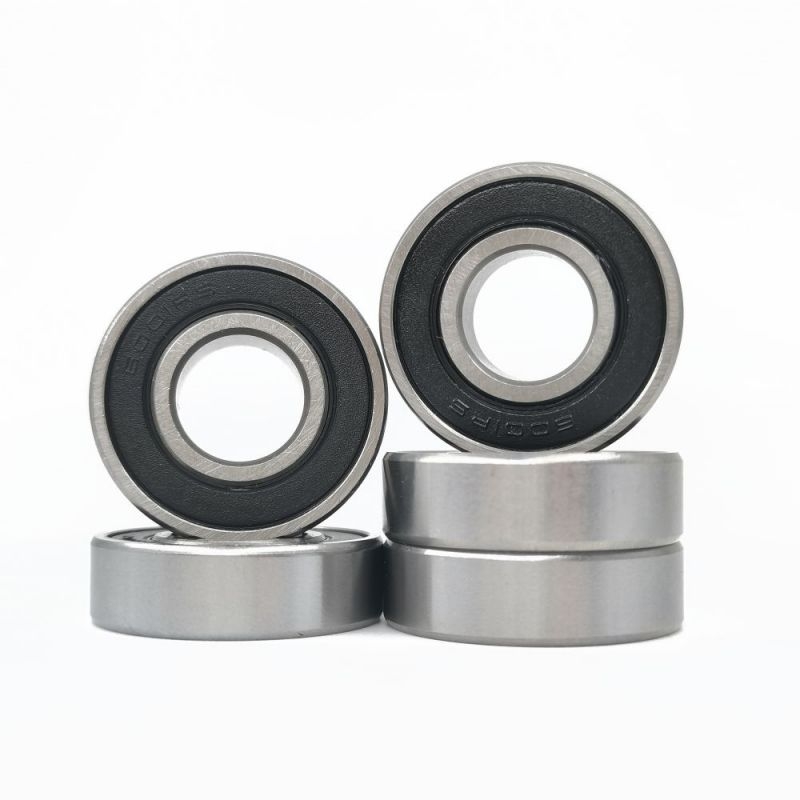
Standard State of Deep Groove Ball Bearings Deep Groove Ball Bearings are designed primarily to withstand radial loads, consisting of an inner ring, an outer ring, steel balls, and a cage. In their original factory state, these bearings typically have Internal Clearance, meaning there is a tiny physical gap between the balls and the raceways. This design compensates for interference fits during installation and metal thermal expansion during operation, preventing the bearing from seizing. Difference Between Clearance and Preload
| Performance Parameter | Operating with Clearance | Preloaded State |
| Rotational Accuracy | Lower (Radial/Axial runout exists) | Extremely High (Precise positioning) |
| Rigidity/Cantilever Support | Lower | Significantly Improved |
| Friction Torque | Small (Low starting resistance) | Larger (Increases with contact pressure) |
| Operating Temperature | Lower and stable | Relatively higher (Requires heat monitoring) |
| Limiting Speed | Higher (Room for thermal expansion) | Restricted (Requires precise force control) |
| Noise and Vibration | Potential vibration at high speeds | Significantly reduced (Suppresses ball skidding) |
| Installation Requirements | Simple, high tolerance | Strict, requires precise force adjustment |
Technical Point: Deep Groove Ball Bearings typically use C3 (Large), CN (Standard), or C2 (Small) clearance grades. In applications requiring preload, standard or small clearance models are usually selected to achieve the ideal working state through axial displacement adjustment.
In mechanical system design, Deep Groove Ball Bearings do not always require preloading. Whether to apply a preload force depends primarily on the specific requirements for precision, speed, and stability of the application.
In the following common scenarios, Deep Groove Ball Bearings typically operate with positive clearance and do not require preloading:
When application requirements exceed basic load-bearing capabilities, a preload must be applied to Deep Groove Ball Bearings:
| Evaluation Dimension | Operating with Clearance | Operating with Preload |
| Working Stiffness (k) | Lower, non-linear change with load | Significantly improved, minimal deformation |
| Positioning Accuracy | Displacement exists in axial/radial directions | Axial position locked, low circular runout |
| Frictional Power Loss | Extremely Low | Higher |
| Heat Generation Rate | Slow, low heat dissipation pressure | Fast, requires thermal balance/lubrication check |
| Vibration Value (RMS) | Higher (due to ball-raceway collisions) | Extremely Low (system in a tight state) |
| Fatigue Life (L10) | Normal | Potentially extended or shortened |
| Min. Load Requirement | Requires external load maintenance | Automatically satisfied |
In the application of Deep Groove Ball Bearings, preloading techniques are mainly divided into Axial Preload and Radial Preload.
This is the most common preloading method for Deep Groove Ball Bearings. A wave spring or helical spring is typically placed against the side of either the outer or inner ring.
The relative position of the bearings is forced into adjustment using mechanical components such as locknuts, spacers, or precision end covers.
| Performance Indicator | Spring Preload | Fixed Preload |
| Force Consistency | Extremely High | Low (Affected by expansion) |
| System Rigidity | Lower (Limited by spring k-value) | Extremely High (Metal-to-metal) |
| High Speed Capability | Very suitable for high-speed operation | Suitable for low-to-medium speeds |
| Installation Difficulty | Simple, high tolerance for error | Complex, requires precise measurement |
| Vibration Absorption | Excellent (Spring provides damping) | Fair |
| Cost | Lower (Standard spring components) | Higher (Precision machined parts) |
| Load Compensation | Compensates for wear-related gaps | No automatic compensation |
Achieved through Interference Fit.
| Performance Indicator | Zero Preload | Light Preload | Medium/Heavy Preload |
| Rotation Accuracy | Standard | Significantly Improved | Maximum stability |
| Friction Torque (M) | Minimum | Increases by 20% - 50% | Doubled or higher |
| Rigidity (N/um) | Lower | Moderate | Extremely High |
| Operating Temp Rise | Ambient rise | Slight increase | Continuous rise |
| Limiting Speed (n_max) | 100% | Approx. 75% - 85% | Significant drop |
| Noise Level (dB) | Baseline | Reduced by 3-5 dB | Potential friction noise |
| Fatigue Life (L10h) | Theoretical Max | Reaches optimal state | Sharp Decline |
A: No. The initial contact angle of a Deep Groove Ball Bearing is 0 degrees. Applying excessive axial preload forces the balls against the raceway edges, creating edge stresses that lead to overheating and early failure.
A: This can be determined by "Friction Torque" and "Operating Temperature Rise."
A: It is generally estimated based on the Basic Static Load Rating (C0) of the bearing:
A: It has a huge impact on Fixed Preload. Thermal expansion of the shaft can significantly increase the preload force. In contrast, Spring Preload is insensitive to temperature changes, with force fluctuations typically under 5%.
A: This is usually due to "Over-Preloading" causing raceway deformation or lubricant film breakdown. When contact pressure exceeds the lubricant's load-carrying capacity, metal-to-metal contact occurs, resulting in humming or high-frequency grinding sounds.


Products
CONTACT Us
Mobile Site
Copyright© Zhejiang Yingfei Biotechnology Co., Ltd. All Rights Reserved
 Wholesale Motorcycles/Cars Vehicles Bearing Source Factory