
 0
0

 English
 Español
 中文简体
中文简体 عربى
عربى
Industry News
Home / News / Industry News / Are Stainless Steel Bearings Better Than Chrome Steel for Your Environment

2026-02-16
In the design and maintenance of modern industrial machinery, the choice of material often determines the ultimate lifespan of the equipment more than the structural design itself. The emergence of stainless steel bearings is essentially to solve the problem of standard high-carbon chrome steel being extremely prone to failure in harsh environments. While ordinary chrome steel bearings perform excellently in terms of hardness and load capacity, their surface oxidation rate is extremely fast when facing moisture, acids, alkalis, or extreme temperature environments, often leading to rust within days of use, which in turn causes axial rotation to stop or mechanical damage.
Stainless steel bearings are not a single material product; they are mainly divided into two camps: the 400 series (such as AISI 440C) and the 300 series (such as AISI 304 or 316). 440C grade stainless steel ensures sufficient hardness through high carbon content, enabling it to withstand high rotational loads; while the 300 series sacrifices part of its hardness in exchange for extremely superior chemical corrosion resistance. The value of stainless steel bearings lies not in "absolute strength," but in their "survivability" in harsh environments.
To understand the performance differences between stainless steel bearings and standard bearings more intuitively, we can compare them through the following key technical indicators:
| Performance Indicator | Standard Chrome Steel (GCr15/52100) | Stainless Steel (AISI 440C) | Stainless Steel (AISI 316) |
| Chromium Content (Cr %) | 1.30% - 1.60% | 16% - 18% | 16% - 18% |
| Nickel Content (Ni %) | None | None | 10% - 14% |
| Hardness (Rockwell C) | 60 - 64 HRC | 58 - 62 HRC | 20 - 25 HRC |
| Dynamic Load Rating | 100% (Baseline) | 80% - 85% | Approx. 20% - 25% |
| Corrosion Resistance | Very Low | High (Moisture, Weak Acid) | Extremely High (Saltwater, Chemicals) |
| Magnetism | Strong Magnetic | Strong Magnetic | Non-magnetic/Weak Magnetic |
The reason stainless steel bearings can remain rust-free for a long time is not because they are completely free of chemical reactions, but because the chromium in the alloy composition forms an extremely dense and transparent chromium oxide film on the surface when it comes into contact with oxygen. This film is called the "passive layer," and it acts like a shield to block the contact between internal metal atoms and external corrosive media.
This self-healing ability is the core competitiveness of stainless steel bearings. If the bearing surface is slightly scratched during use, the passive layer will quickly regenerate in an oxygen environment. In contrast, the rust prevention of ordinary steel bearings relies entirely on the lubricating oil film; once the oil film disappears during cleaning or wear, the bearing is instantly exposed to oxygen and moisture.
In environments with humidity above 60%, the oxidation rate of ordinary bearings increases exponentially. In these high-humidity production lines, even where condensed water is discharged, stainless steel bearings can maintain structural stability for many years. For automated equipment that requires frequent chemical cleaning, choosing stainless steel bearings with high-quality passivation treatment is the only way to reduce unplanned downtime.
When exploring the mechanical performance of stainless steel bearings, a common misconception must be broken: that "stainless steel is harder than ordinary steel." In fact, from a metallurgical point of view, to obtain superior corrosion resistance, stainless steel must sacrifice part of its ultimate hardness and strength in the alloy ratio.
The hardness of stainless steel bearings (taking the most common 440C grade as an example) is usually between 58 and 62 HRC, while high-carbon chrome steel (52100) can easily reach 62 to 66 HRC. This subtle hardness difference directly affects the Load Rating of the bearing. Because the material is slightly softer, stainless steel bearings are more prone to subtle elastic deformation at high-pressure contact points. This means that under the exact same geometric dimensions, the load capacity of the stainless version is usually only 80% to 85% of standard chrome steel.
Despite the slightly lower load capacity, the stability of stainless steel bearings in long-term operation is higher because they do not suffer from early failure due to spalling caused by rust.
| Mechanical Property | High Carbon Chrome Steel (SAE 52100) | 440C Stainless Steel | 316 Stainless Steel |
| Young's Modulus | 210 GPa | 200 GPa | 193 GPa |
| Ultimate Tensile Strength | 2200 - 2400 MPa | 1800 - 1900 MPa | 500 - 600 MPa |
| Fatigue Limit | Extremely High (Better under high load) | High (Better in corrosive environments) | Low (Light load only) |
| Impact Resistance | Medium | Medium-High | Excellent |
Temperature fluctuation is an invisible killer leading to bearing failure. Stainless steel bearings have a natural advantage in thermodynamic performance. First is the material's oxidation temperature limit. Standard bearing steel begins to undergo changes in its microstructure when it exceeds 120°C, and its hardness drops rapidly, while high-quality stainless steel bearings can operate stably in higher temperature ranges (with appropriate heat treatment processes).
In extreme low-temperature environments (such as liquid nitrogen or aerospace applications), ordinary carbon steel becomes very brittle (cold brittleness) and is prone to cracking during operation. In contrast, stainless steel bearings made of austenitic stainless steel (such as the 300 series) still maintain excellent toughness at low temperatures.
Furthermore, the linear expansion coefficient of stainless steel bearings is closer to many mechanical housings made of aluminum or stainless steel. This is critical in equipment with violent temperature changes, as it prevents excessive compression or loose vibration between the bearing and the shaft journal due to different expansion rates.
Operating Temperature Range:
Standard Chrome Steel: -30°C to +120°C (under conventional lubrication)
Stainless steel bearings (440C): -40°C to +250°C (after high-temperature tempering)
Stainless steel bearings (316): -150°C to +300°C (designed for specific conditions)
Linear Expansion Coefficient (10^-6 / K):
Ordinary Bearing Steel: Approx. 11.5
Stainless steel bearings: 10.5 to 12.5 (depending on specific alloy composition)
In the food production and packaging industry, stainless steel bearings are not just an option, but a mandatory industry standard. Food safety laws stipulate that any components that may come into contact with food or operate above food processing areas must have extremely high chemical stability to prevent metal rust stains from contaminating food.
The smooth surface of stainless steel bearings is not easy for bacteria to adhere to and can withstand high-intensity "Washdown" conditions in food plants. These environments typically involve:
High-pressure spraying: Frequent cleaning with high-pressure water guns.
Strong detergents: Chemical disinfectants containing strong alkaline or acidic components.
Extreme temperature differences: Fast switching from cold storage workshops to high-temperature sterilization lines.
Only stainless steel bearings combined with high-grade seals and food-grade lubricants can survive under these brutal conditions.
In marine engineering, salt spray corrosion is the "number one enemy" of metal parts. Under the erosion of salt-containing moisture, the surface of ordinary bearings will quickly develop pitting, followed by severe rust peeling. Stainless steel bearings, especially those using the 316 grade, show incomparable stability in seawater immersion and high-humidity sea breeze environments.
Because 316 stainless steel has added molybdenum, it has a very strong ability to resist chloride corrosion (such as seawater, de-icing salt). For deck machinery, submersible pumps, or offshore wind power equipment, the application of stainless steel bearings can extend the maintenance cycle of equipment from a few months to several years.
[Image illustrating pitting corrosion comparison between chrome steel and 316 stainless steel]
| External Environment | Standard Chrome Steel | 440C Stainless Steel | 316 Stainless Steel |
| Intermittent Salt Spray | Rusted within 24 hours | Withstands 48-96 hours | Withstands 500+ hours |
| Long-term Seawater Immersion | Rapid failure | Surface pitting occurs | Excellent performance, no rust |
| Primary Applications | Dry indoor environments | Pumps/valves near coastlines | Deep sea, ship decks |
The requirements for bearings in medical equipment have gone beyond simple mechanical performance, focusing more on "biocompatibility" and "non-magnetism." The application of stainless steel bearings in the medical industry is not only for rust prevention, but also to meet the needs of cleanrooms and high-precision diagnostics.
Non-magnetic environment: In MRI (Magnetic Resonance Imaging) equipment, any magnetic substance will interfere with the magnetic field, leading to image distortion. Stainless steel bearings made of 300 series materials are one of the few metal solutions that can be used with ceramic bearings to meet complete non-magnetic requirements.
High-temperature sterilization: Surgical instruments (such as dental handpieces, microsurgical drills) need to be frequently sterilized by high-pressure steam at temperatures above 135°C in an autoclave. Stainless steel bearings maintain extremely high dimensional stability during these humid and hot cycles.
Ultra-low noise: For patient care equipment (such as ventilators, infusion pumps), high-purity stainless steel bearings (ABEC 5 or higher) can provide an extremely quiet operating environment, improving patient comfort.
| Attribute Indicator | Industrial Standard | Medical/Lab Grade |
| Precision Class (ABEC) | ABEC 1 - 3 | ABEC 5 - 9 |
| Magnetic Permeability | Strong Magnetic (>1) | Extremely Low (≤1.01) |
| Surface Roughness (Ra) | ≤0.05 μm | ≤0.02 μm |
| Chemical Stability | Rusted by saline | Inert to blood/saline |
Many buyers hesitate when faced with the initial cost of stainless steel bearings (usually 2 to 4 times that of ordinary bearings). However, the value must be redefined through the Total Cost of Ownership (TCO).
The ROI of stainless steel bearings is mainly reflected in three dimensions:
Reduction in downtime loss: In automated production lines, replacing a $10 bearing may require 2 hours of downtime, resulting in thousands of dollars in lost capacity. Stainless steel bearings greatly reduce the frequency of this unplanned downtime.
Savings in lubrication and maintenance: Because stainless steel itself has certain antioxidant properties, it requires less frequent lubrication in some light-load conditions and does not require expensive rust-proof coating maintenance.
Long-life conversion: Assuming the lifespan of ordinary bearings in a humid environment is 3 months, while stainless steel bearings last 2 years. Even if the initial unit price is 3 times higher, the long-term hardware procurement cost is only 1/3 of ordinary bearings.
Stainless steel bearings come in more than just one form. To adapt to various working conditions from deep-sea exploration to automated assembly lines, engineers have designed multiple variants.
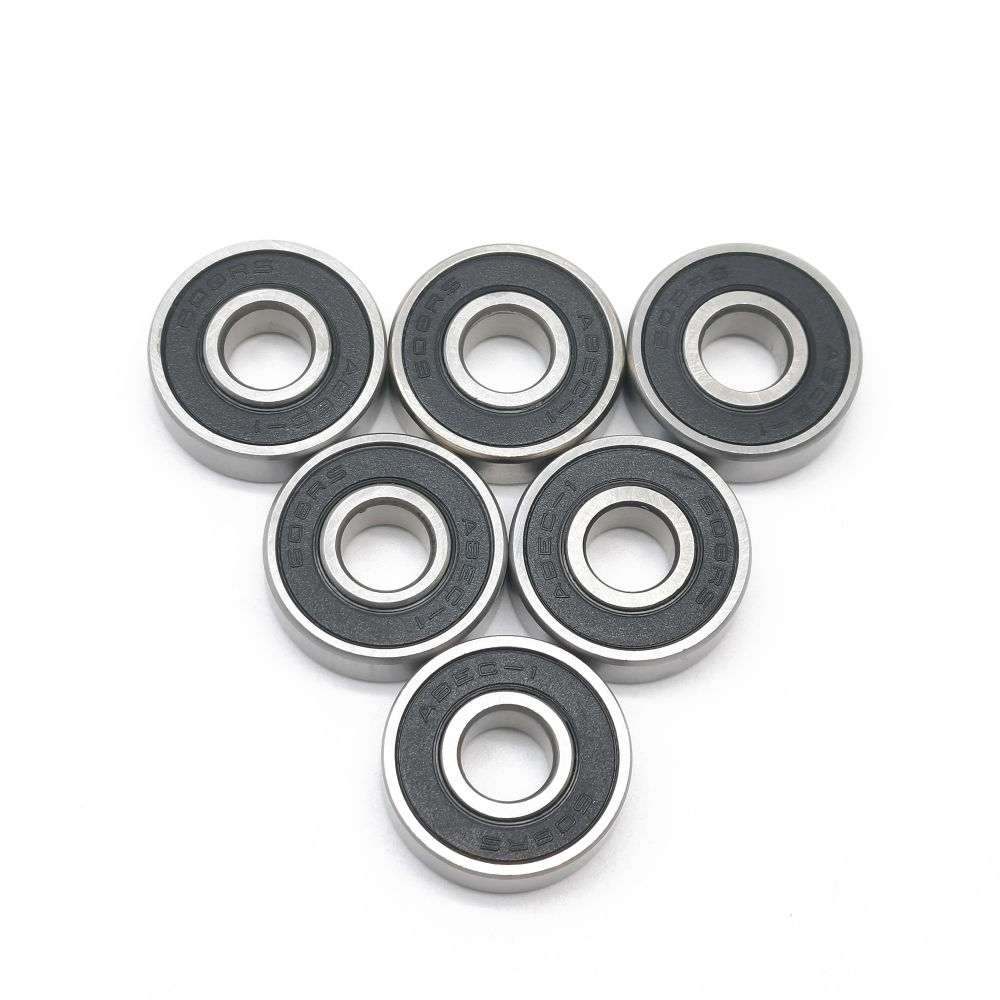
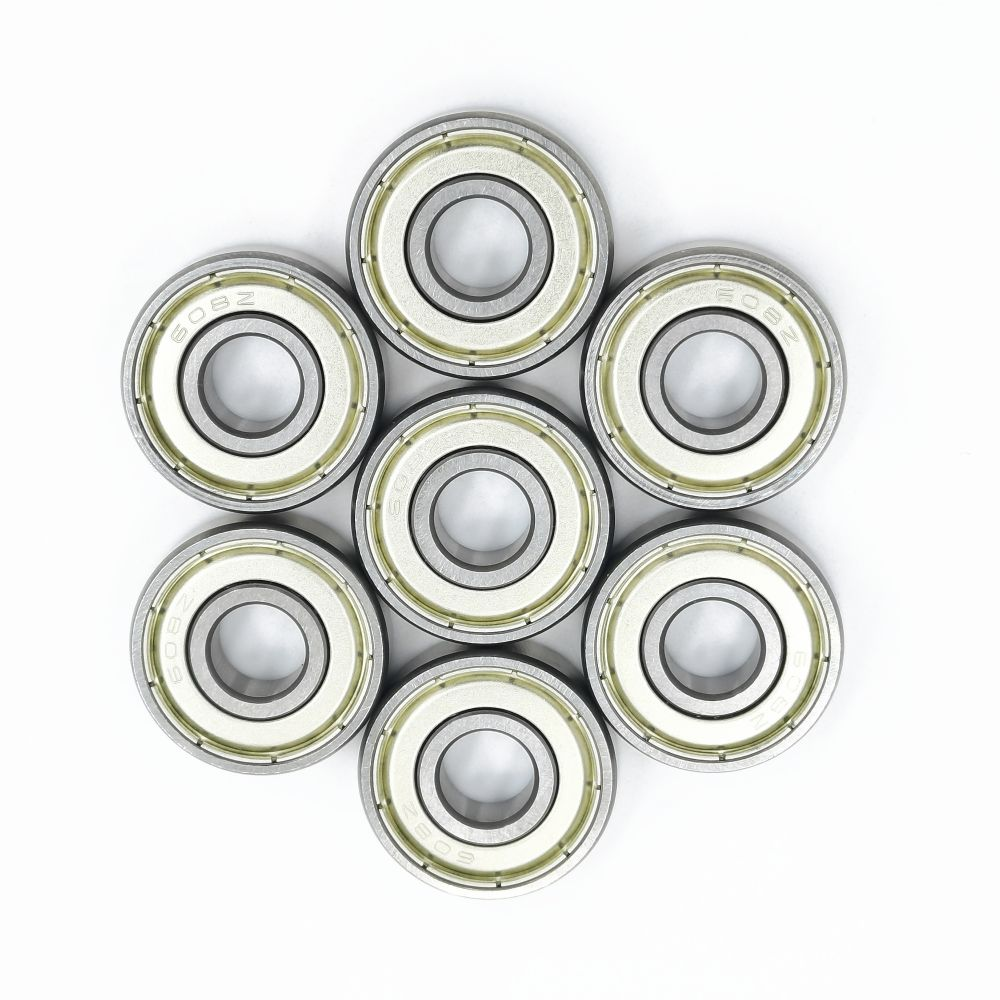
Deep Groove Ball Bearings: This is the most versatile and widely used type of stainless steel bearings. Its simple structure can withstand radial loads and part of the axial load in both directions, making it ideal for high-speed, low-noise applications.
Insert Bearings & Pillow Blocks: In conveyor belts and agricultural machinery, stainless steel bearings are often installed in housings made of stainless steel or thermoplastic. This combination provides excellent self-aligning capabilities.
Flanged Bearings: The flanged design simplifies axial positioning on the housing, ensuring that stainless steel bearings do not shift in vibrating environments.
Hybrid Ceramic Solutions: This advanced design uses stainless steel rings with ceramic balls. This variant of stainless steel bearings solves electrical conductivity issues, and the extremely high hardness of ceramic balls further improves wear resistance.
| Variant Type | Ring Material | Seal Type | Core Advantage |
| Standard Stainless | AISI 440C | Rubber Seal (RS) | High hardness, universal |
| Food Grade Insert | AISI 304/440C | Triple-lip Seal | Washdown resistant, self-aligning |
| High Corrosion Grade | AISI 316 | PTFE Seal | Best chemical resistance, non-magnetic |
| Hybrid Ceramic | AISI 440C | Non-contact Shield (ZZ) | Ultra-high speed, insulated, long life |
Even the highest quality stainless steel bearings will fail prematurely if installed improperly or if maintenance is lacking.
Prevent cross-contamination: Before installing stainless steel bearings, the tools and installation environment must be thoroughly cleaned. If tools that have handled ordinary carbon steel are used directly on stainless steel, tiny carbon steel debris will embed into the surface, causing "contact galvanization" and rust.
Correct fit tolerances: Stainless steel bearings should follow strict interference fit or clearance fit standards during installation. Excessive hitting (especially hitting the outer ring to install the inner ring) will cause "Brinelling" on the raceway, which is the source of noise and vibration.
Selection of lubricants: Although the material itself is rust-proof, lubrication is still indispensable. In the food or medical fields, H1 grade food-grade grease must be used; in extremely low-temperature conditions, a low-viscosity synthetic oil should be selected to prevent grease from freezing and jamming the stainless steel bearings.
Regular health monitoring: Monitor temperature rise and vibration frequency. If the operating temperature of stainless steel bearings rises abnormally, it usually indicates lubrication failure or internal contamination.
Q: Can stainless steel bearings really never rust?
A: "Stainless" does not mean "rust-proof." Its rust prevention comes from the chromium oxide film on the surface. If the bearing is exposed to strong concentrated acids, oxygen-deprived environments, or severe physical scratches for a long time, stainless steel bearings can still exhibit surface corrosion.
Q: Why are my stainless steel bearings magnetic? Is this normal?
A: Very normal. The most commonly used stainless steel bearings (440C material) are martensitic stainless steel, which obtains high hardness through heat treatment and is therefore strongly magnetic. Only austenitic stainless steels like 316 are non-magnetic or weakly magnetic.
Q: Can stainless steel bearings run without lubrication?
A: Theoretically, they can run for a short time without lubrication under extremely light loads and ultra-low speeds. But for the vast majority of industrial applications, the lubrication film is key to preventing direct metal contact, dissipating heat, and assisting in corrosion prevention.
Q: How to distinguish between 440C and 304/316 bearings?
A: The simplest physical method is using a magnet. 440C stainless steel bearings will be firmly attracted by a magnet; whereas 304/316 materials usually are not. Additionally, 440C has extremely high hardness and is difficult to scratch with a standard file, while 304 is relatively soft.
Q: In high-temperature environments, how should seals be selected?
A: Traditional NBR rubber seals will harden and fail above 120°C. For stainless steel bearings in high-temperature conditions, it is recommended to choose stainless steel shields (ZZ) or Viton seals to ensure excellent protection performance is maintained.


Products
CONTACT Us
Mobile Site
Copyright© Zhejiang Yingfei Biotechnology Co., Ltd. All Rights Reserved
 Wholesale Motorcycles/Cars Vehicles Bearing Source Factory